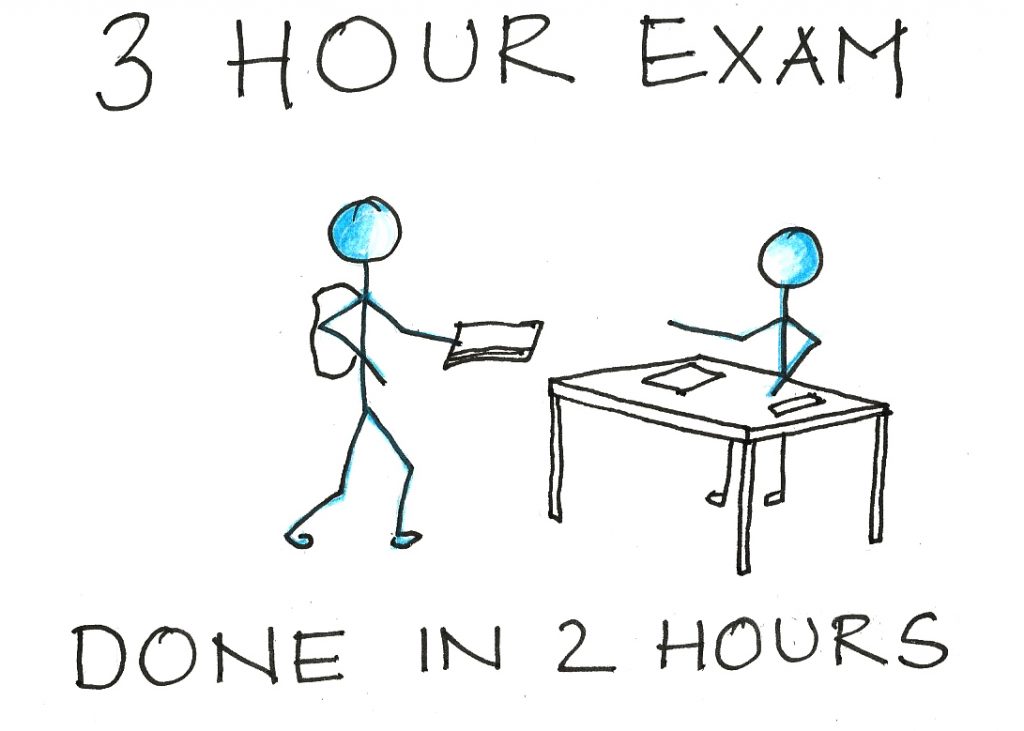
I’ve never been that keen on studying before an exam. I rarely study for more than a half hour, even for big final exams worth more than half my grade. When I do study, I usually just skim over the material and do a few practice questions. For some of my math classes I have yet to do a single practice question for homework. Most people study by cramming in as much information before walking into the test room, whereas I consider studying to be no more than a light stretch before running.
Despite what some might point out as horrible studying habits, I’ve done very well for myself in school. I had the second highest marks in my high-school class with honors all four years. My first term university marks were two A+’s and an A, for calculus, computer science and ancient Asian history, all courses with high failure rates. I also won a national chemistry exam for a three province wide district that I didn’t even realize I was writing until I was called in and told to get started.
It’s very easy to look at my successes and apparent lack of effort and quickly deem that it is an innate gift, impossible to replicate. I think this is bullshit. I believe that myself and anyone else who can produce these results simply has a more effective strategy for learning new material. With my system of learning, you only have to hear or read something once to learn it. Best of all I believe it is a system that can be learned.
Webs and Boxes
The system I use for learning I’m going to call holistic learning. But in order to fully appreciate what holistic learning is, you need to take a look at it’s opposite – compartmentalized learning. Virtually all learning is done somewhere between completely holistic and completely compartmentalized learning. Although people rarely sit exactly on one extreme, people who are close towards learning through compartments will need to cram and study for hours just to hope for a pass where people who lean more to holistic learning can often breeze through heavy course loads.
People who learn through compartments, try to organize their mind like a filing cabinet. Learn a new chemical equation, these people will try to file that information. Hopefully they will file it near some other chemical equations so that they will stumble upon it when they need to on the exam. Compartmentalized learners make distinct file drawers for science, math, history and language arts. Placing all the things they know into little boxes.
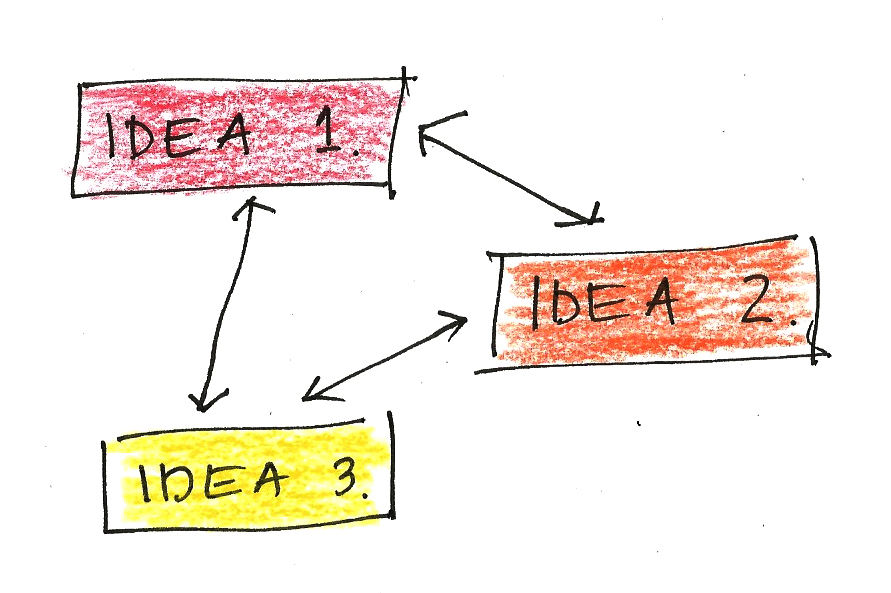
Holistic learning takes an opposite approach. Learning holistically is not done by trying to remember information by using repetition and force. Holistic learners instead organize their minds like spider webs. Every piece of information is a single point. That point is then consciously related to tons of other points on the web. There are no boxes with this form of learning. Science becomes literature which becomes economics. Subject distinctions may help when going to class, but a holistic learner never sees things in a box.
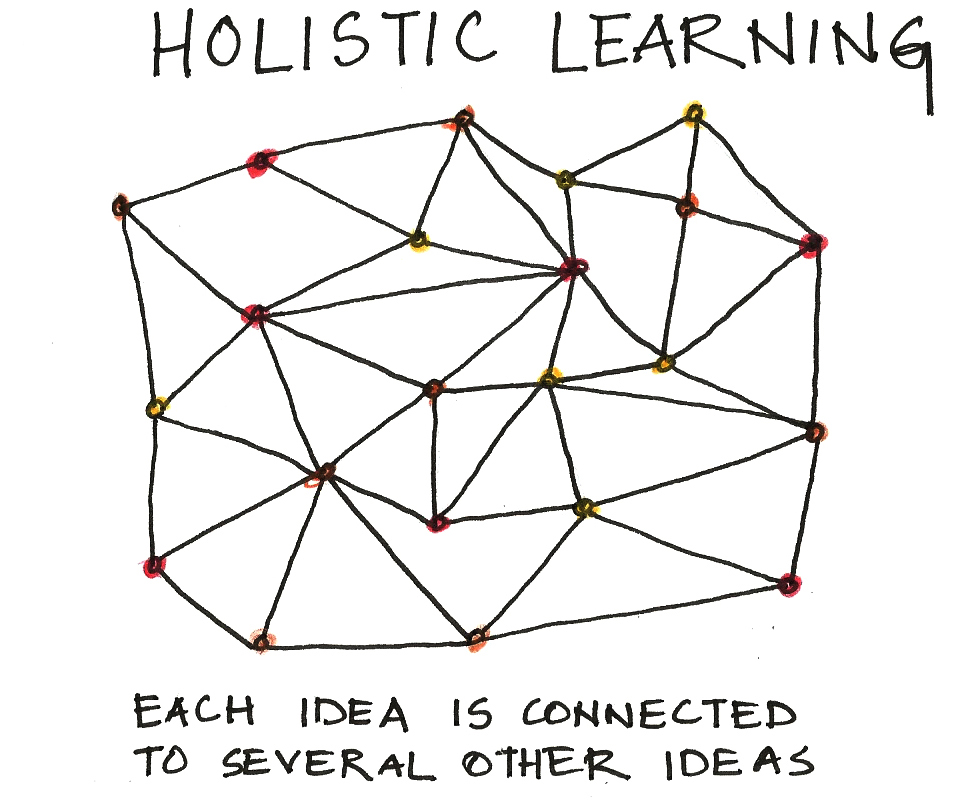
When it comes time for exams (or any practical application for your knowledge) compartmentalized learners have to hope that they pounded the information hard enough into their head so it might come up during the exam. Holistic learners do the opposite. Holistic learners only need to start at one point on their web, but they can use that web to feel around and find all the associated information they need.
The chemistry exam I won for three provinces I wasn’t even taught over half the information on the test. Because my web was so heavily interrelated, even when a node on the web was missing I had a good chance at guessing at what it contained. This meant that on a multiple choice test I could only understand a third of what the question asked and still be able to eliminate answers. Winning a test that you don’t actually know half the information on it sounds impossible, but not to a holistic learner.
Compartmentalized learning is an exercise in insanity. A comparable strategy would be if the users of the web didn’t hyperlink anything. So to find any information you just had to keep typing addresses into your browser, hoping that it would pop up. Studying for these learners is akin to setting up thousands of domain names that all lead to the same information, so that you will hopefully get to the right place by just guessing enough. Not only is it ineffective when exam time comes, it takes hours to put in place.
Very few people are purely compartmental learners. For most people they manage webs of information holistically to a certain degree. But unfortunately, their webs simply aren’t interlinked enough. Each subject usually has a fairly distinct web and each unit of information has only one or two associations. Like trying to surf the net when each page only has one or two outgoing links. Possible, but far from effective.
If you look at the structure of your brain, it will become immediately obvious why compartmentalized learning, organized like a computers file folder system, doesn’t work. Your brain is itself a web of neurons. Creating hundreds of associations between ideas means that no matter where you start thinking, you can eventually get to the piece of information you need. If a road is closed for some reason, you can take one of the hundreds of other side streets.
Maximizing Your Holistic Learning
Understanding holistic learning is one thing, putting it into practice is another. I’ve been learning very close to the extreme of complete holistic learning for so long that my web is pretty well interconnected. But if you haven’t been really interweaving your web, then the best way to improve your ability to learn is to start now.
Here are a few suggestions for how you can better interlink your web:
1) Ask Questions
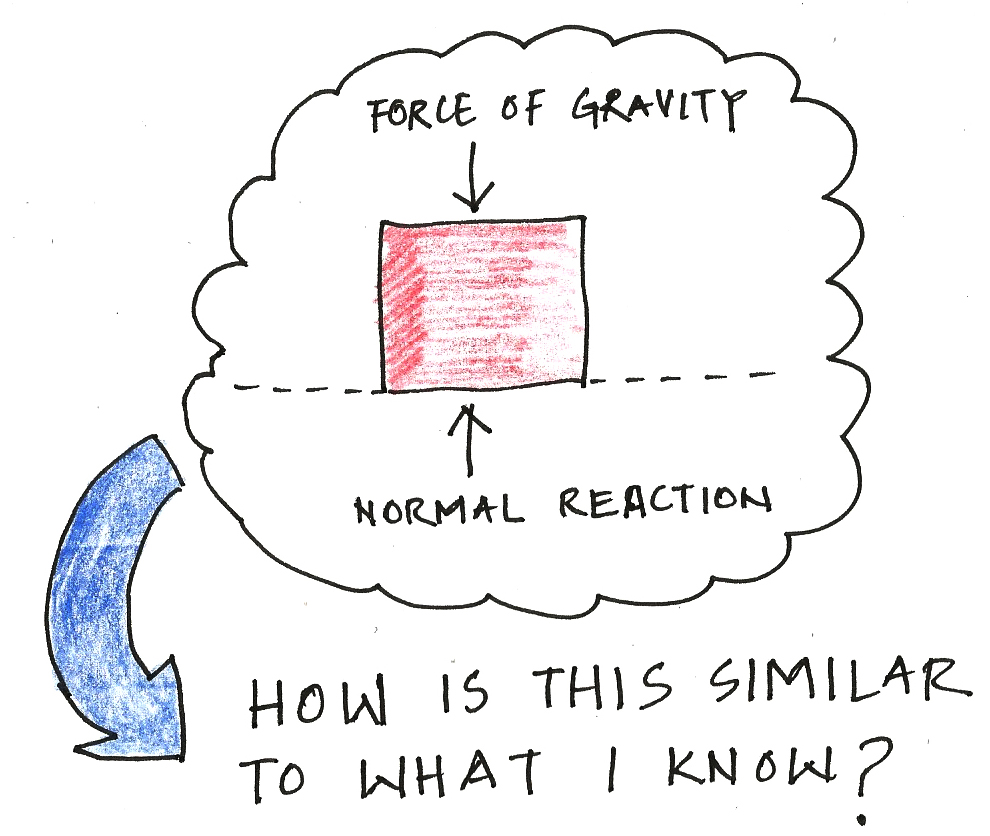
When you are learning something, you can make associations simply by asking yourself questions. How does this information relate to what we’ve been studying? How does this information relate to other things I’ve already learned? How does it relate to other subjects, stories or observations?
Be creative and try to find several different points of reference for every idea you learn. Figure out not only what things are similar too, but why they are what they are. As this becomes a habit, you’ll find that you automatically remember information because it fits into your web of understanding. Ask yourself after you hear something whether you “get it”. If you don’t go back and ask yourself more questions for how it fits it.
2) Visualize and Diagram
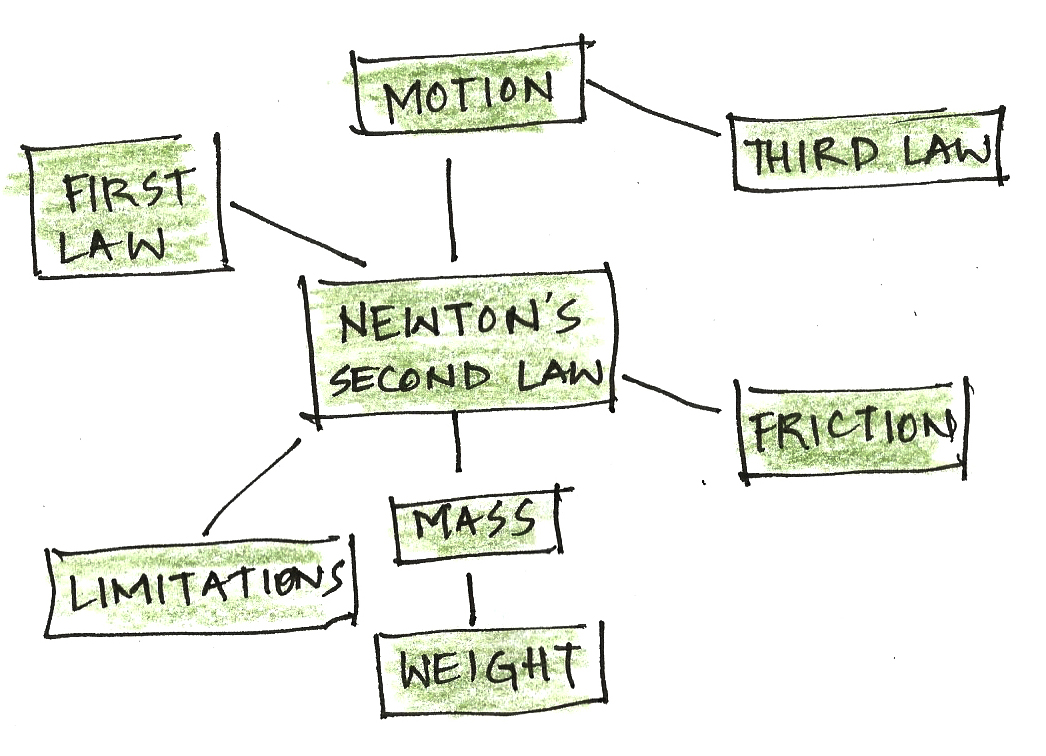
One of the best ways to begin practicing holistic learning is to start drawing a diagram that associates the information you have learned. Better than taking notes during a lecture is drawing a picture for how what you are learning relates to anything else you have already learned. Once you get good at this you will be able to visualize the diagram before it is drawn, but start drawing to get practice.
When I try to understand economics it often helps me to visualize the relationship between different factors. I view cycles of money, GDP or price levels as a structure that combines all the different elements. If you can’t immediately create vivid pictures of the information, try drawing them first.
3) Use Metaphors
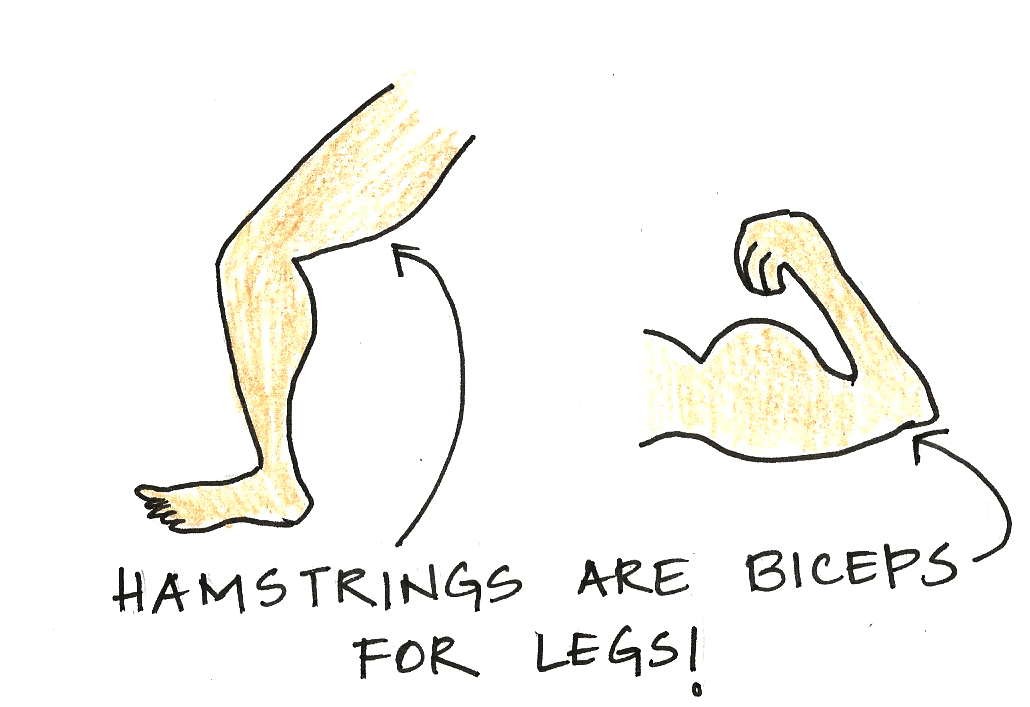
Anything you are learning should be immediately translated into a metaphor you already understand. When reading Niccolo Machiavelli’s The Prince, I understood his writings by relating all the examples of statecraft and war he offered to areas of business and social relationships which I already understood.
While visualization creates tight webs that interlink within a subject, metaphors create broad webs that link completely different ideas. You might not realize how that blog article on fitness you read two weeks ago relates to math, but through making metaphors you have a huge reserve of information available to you when you need it.
4) Feel It
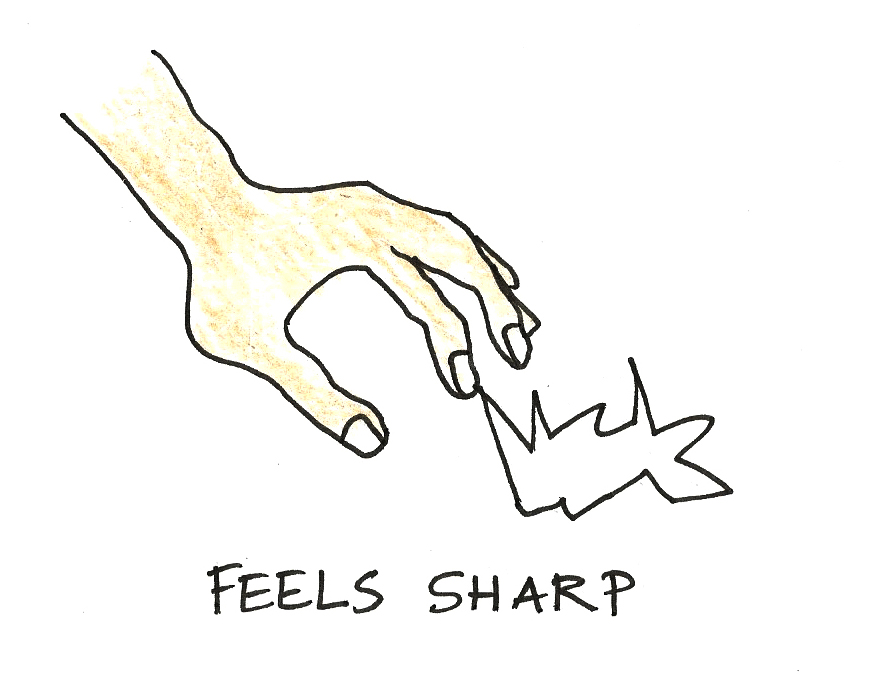
Another technique I’ve experimented with to improve my holistic learning is feeling through ideas. This one is a little more difficult to explain, but the basic idea is that instead of associating an idea to a picture or another metaphor, you associate it with a feeling. I’m a visual learner, so I’ve found it to be ineffective for large pieces of data, but it is really helpful for data that is otherwise hard to relate.
I used this process to easily remember the process of getting the determinant of a matrix. For you math buffs, you probably already know that the determinant of a 2×2 matrix is basically the left diagonal minus the right diagonal. I was able to associate this information into my web through a feeling by imagining what it would be like to move my hands through each diagonal on the matrix. This is an incredibly simplified example, but feeling ideas can be very useful.
5) When in Doubt, Link or Peg It
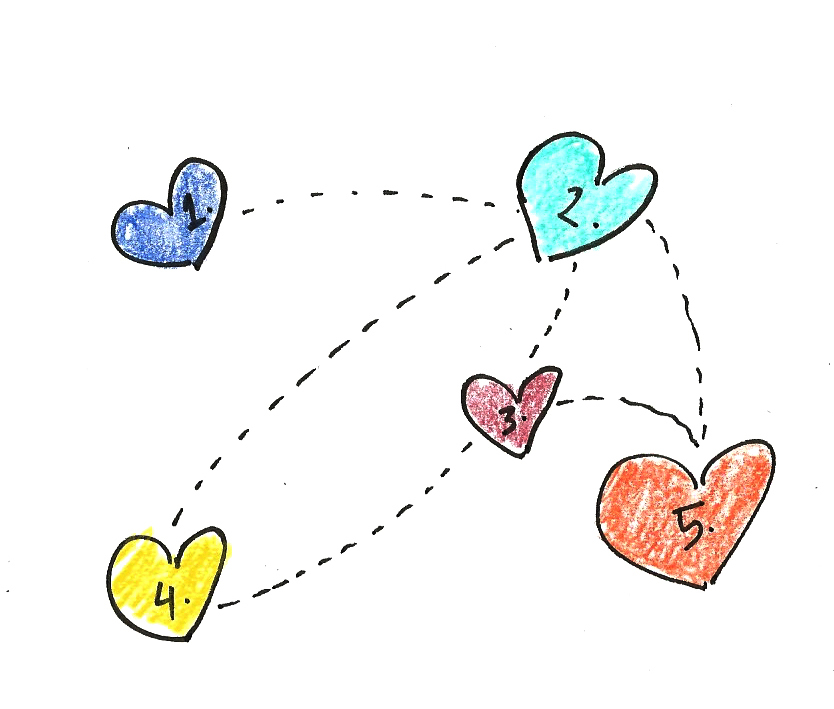
Questions, visualization, metaphors and feeling should cover about 99% of the information you need to learn. They are the most effective ways to interlink ideas. But if you still need to memorize some information that you can’t understand or relate, your fall-back can be the link and peg system.
Explaining these memory systems is out of the scope of this article, but the basic idea of the link system is to create a wacky, vivid picture relating two seemingly unrelated ideas so that a connection between them is forced. The peg system takes it a step further creating a simple phonetic system for storing numbers and dates. You can learn more about these systems here.
Dirt Roads and Superhighways
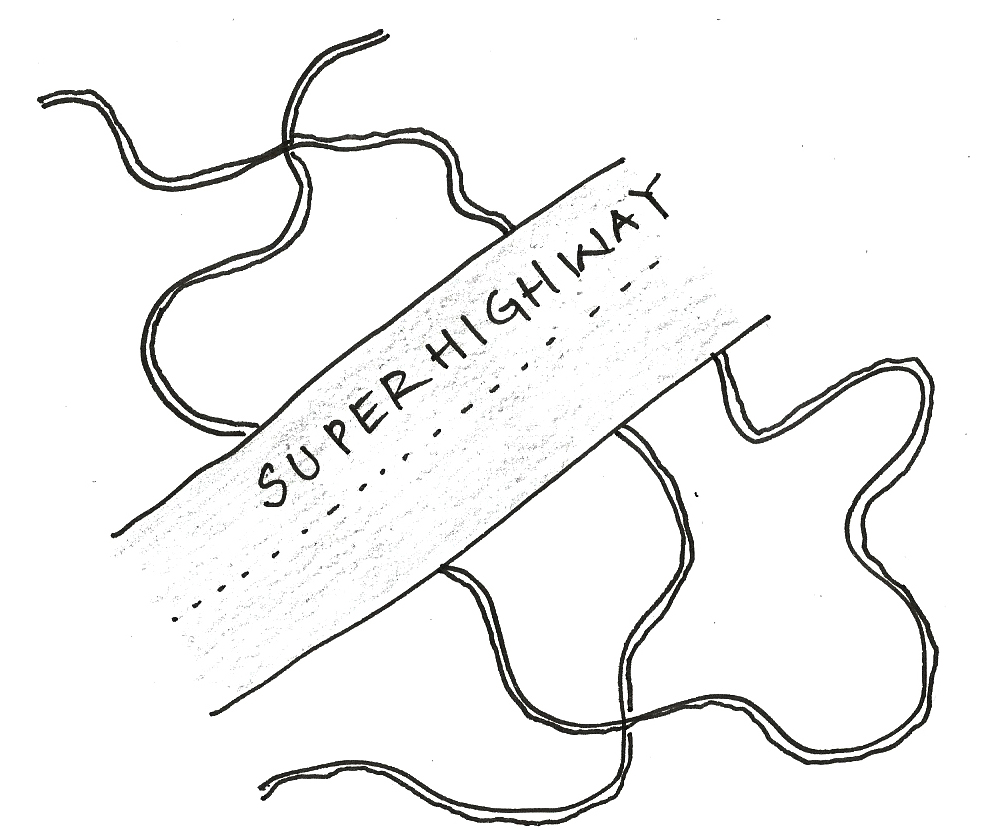
An effective web should heavily interlink between ideas of a similar subject, but it should also have links that extend between completely different ideas. I like to think of these two approaches like comparing dirt roads and superhighways. You need lots of cheap dirt roads to interconnect closely related areas and a few superhighways to connect distant cities.
When I was learning history I would make dirt roads connecting the aspects of one particular time period and culture to itself. Linking the artistic achievements of the Song Dynasty with their political situation. But I would also make highways and superhighways. I would compare Song China to India and to the politics in the United States.
Some people build a lot of dirt roads but forget the highways. They understand things well within a subject, but they can’t relate that subject outside of the classroom. Hamlet is one of my favorite literary works because in the classroom where I learned it, our teacher went to great lengths to help build superhighways. We would discuss how aspects of Hamlet related to our own life, politics and completely different areas. As a result I remember more from that play than almost any other piece of literature I studied.
The End of Studying
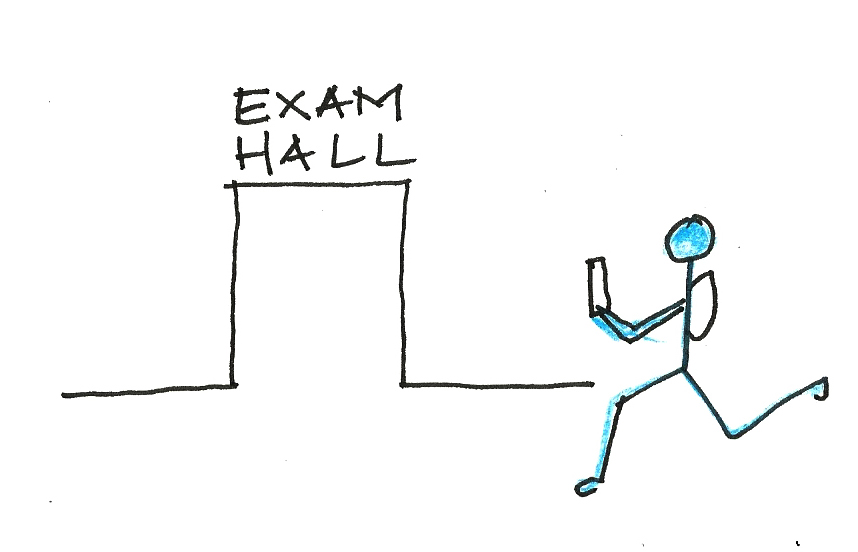
Studying should be like stretching before a big race. It isn’t a time to get in shape. I lied a bit when I wrote the title of this article. I do study. But I don’t do it for the same reasons that other people do. I study to ensure my web is functioning, not to start building it. Even when I do study, it is just a quick review, never an all-night cramming session.
Some of you may read this article and start thinking that going to the trouble of drawing out diagrams and thinking hard about metaphors to practice holistic learning is going to take too much time. I believe the opposite is true. I have saved a lot of time using these techniques so that school has become just a minor time investment in the overall work I do each day. Practice holistic learning and you can spend less time cramming and more time actually learning.
Looks like I can’t help but start a bit of controversy.
![]()
I’ve addressed many of the confusions and concerns this article has generated with a follow up post on what holistic learning is, precisely, and how you should really be using studying to learn. Ultimately holistic learning isn’t about passing exams but understanding anything, a skill anyone can use.
Check it out here: Studying and Holistic Learning
Edit: April 26, 2006 – Wait! There’s more. Check out the Holistic Learning E-Book for 27 Full Pages. Full color illustrations and best of all, it’s completely free.
Check it out here: Holistic Learning E-Book
Edit: September 10, 2008 – Still want more? I’ve written a full e-book guide covering holistic learning, answering common questions, dozens of techniques, productive studying skills and exercise templates to get you started onto holistic learning. Plus, if you don’t love the book, it comes with a 120-day money back guarantee.
Check it out here: Learn More, Study Less


I'm a speed-reading, vegetarian, holistic learning, productivity hacking recent university graduate. And, for the last five years I've been experimenting to find out how to get more from life.
[...] Holistic Learning [...]
So do you even take notes during class? or while studying? or is it all mental, the visualization and stuff. Seems very difficult visualizing in harder subjects like in the engineerng fields.
Thank you for this article. This is truly excellent. I have been practicing holistic learning for a while now, and I cannot begin to explain my satisfaction due to it. I could write you another whole paper on my findings on the same topic…and who knows…maybe I will. But I will keep this entry short.
I fully agree with the mental web idea, and it is definitely a reality. Practicing the “box” method is like doing a workout or exercise incorrectly. It can be damaging. This must be guarded against, so that we can get mentally fit.
[...] about changing habits, staying productive and learning over at his blog. Check out his articles: How to Ace Your Finals Without Studying and his e-book, How to Change a [...]
[...] habits at his website. Some of Scott’s most popular articles include: Double Your Reading Rate, How to Ace Your Finals Without Studying and Unique 80/20 Rule [...]
I’m sure this is just another skill that needs to be developed. Can you please help start me off?
For example, I’m taking Gr12 math and the subject is logarithm. How am I supposed to web logarithm with other real life situations?
Albert,
Earthquakes are measured on a Richter scale which is logarithmic. As are decibels.
Your perception of sound is logarithmic. When something subjectively feels twice as loud it may actually have ten times the amount of energy in the sound waves.
-Scott
[...] How to Ace Your Finals Without Studying – My first article on holistic learning. One of the top 5 most-read articles on this website. [...]
[...] introduced holistic learning almost a year ago in an article, How to Ace Your Finals Without Studying. The article and small e-book that followed have become the most viewed items on this website. Even [...]
I think it’s funny how people question how this is applicable to math, physics and engineering subjects. Where could they possibly be more applicable? If you “get” one math course, courses that build upon that one will become so much easier.
This is also why in math I somewhat dislike when someone throws a couple of random theorems on me. Sure, they may be true but what do they relate to? Are they perhaps more general versions of something I already know? Do they tell me something knew about other things I’ve “got” already? How can I use the theorems? Etc.. I prefer when these kinds of questions are addressed as well.
Also, a rant about how this relates to my experience as an exchange student at an American university:
This is why I hate assignments here at the University of Waterloo. I come from a Swedish University, where I very much practiced this kind of learning. Here however, the workload is so heavy that my main source of learning is by doing all the weekly assignments. They don’t really help me relate to other things I know. I don’t feel I have time to read through the text books, that often do contain some answers to these kinds of questions.
Instead, if I want good marks, I have to spend loads of time writing up assignments really carefully, so that the anal TAs (whom I presume where trained by equally anal TAs before them, however this started) don’t mark them down for trivial omissions, typos and mistakes. I have to spend almost as much time on the things I get instantly as on things I must study some before I get it. I guess this is mostly caused by the tendency to mark everything, and then have the final mark as some weighted average of marks. Perhaps this allow more average students who don’t really want to learn to pass? I wish they’d let us take some responsibility for our own learning.
I also never quite understood the focus on deadlines and stress. Deadlines are seen as terribly important. Why? Tests are long but the time to write them is short. I feel that this also discourages the “mapper” kind of learning, as the “packer” way of learning is more efficient at producing quick answers (where one knows all the answers but can’t come up with new ones), to use some other terms for this I’ve seen.
Needless to say it’s not as fun and rewarding to study here. I do like it here though; it’s just so frustrating to see how much better things could have been.
Johan Fänge,
what are you majoring in at waterloo?…if you ever return to this blog.
Good Article…..well with all these learning strategies have you ever failed a test or quiz?….or better yet has it enabled you to get 100% on a final exam?
Hey, so how often do “explore” your notes?, like how often do you review your webb??? Thanks for the insight.
Jinxee,
I’ve failed one test in my life, my first test in a physics class. But, in the class I was in, every person save one got below 50%, so I wasn’t alone. But, I’m certainly not infallible.
I’ve probably got a few 100%’s, but that is never my goal. I strive for A’s not A+’s, because the amount of work to know something perfectly is much higher than the amount to know 90%.
-Scott
Your writings have been more than an eye-opener. It may be a little late for me, but not for my toddler (wink).
[...] better with less studying by learning holistically. Holistic learning, for those who haven’t read my introduction to the topic, is about linking ideas together instead of relying on rote [...]
[...] better with less studying by learning holistically. Holistic learning, for those who haven’t read my introduction to the topic, is about linking ideas together instead of relying on rote [...]
Samson: I’m taking math and CS courses here, but only for 2 terms. I’m not majoring here (it’s an exchange).
Also, I think that if I hadn’t studied any math at a Swedish university, I probably would’ve found the heavy workload normal, and perhaps even considered it necessary. But that’s not the case now.
I gotta say you give me a lot of hope. I am basically the person you described who crams in 4 days of ‘studying’ before an exam, where all you think about is homework, but the only thing you actually accomplish is a lot of eating…
In 3 years of highschool I often spent more time scratching my head over textbooks than I did with my friends – without realizing it. Its extremely depressing.
Thanks for this!
Hey, you say u only study for like a half hour b4 tests, but that’s when your reviewing your webb, but how long do you spend actually making your webb for the first time? like when learning a new subject.
Kim,
It depends, some courses have more material than others. I wouldn’t say I spend that much more time than everyone else learning the material for the first time.
-Scott
i was thinking of studying for my biology exam but your first three paragraphs led me to believe that i didn’t need to and that i could succeed after ten minutes of preparation … i failed thanks a lot you dick
James,
I’m sorry your exam didn’t go well. Holistic learning is not a process you master after reading the first three paragraphs of a website page, I’m afraid. Even talking to people who have practiced specific techniques for months means they haven’t eliminated all their studying, only reduced or sped up the studying in certain areas.
I wish you the best of luck with your studies. However I don’t promote quick fix solutions, and I do my best not to imply that on my website.
-Scott
[...] популярную статью – «Как стать асом без зубрежки» (How to Ace Your Finals Without Studying), где детально описал процесс, который я называю [...]
Hi, Scott!
First of all, thanks for a great article! I love your blog!
When I study history for example, let’s say I read about Hitler – then do you want me to compare him with other dictators such as Stalin to get a broader perspective or things. Because I feel that when I do this I’m still thinking inside-of-the-box, since history does not become science or anything; it’s still straight history.
Origo,
Don’t be picky about where you make connections. In fact, don’t think about it at all. Just draw connections and be creative.
-Scott
I’ve just finished reading your book “Learn More, Study Less” and I thought it was an awesome piece of literature!
I have a question, though:
What techniques are best to use for history? Connecting event x to event y, assessing to what extent person x was responsible for event y, etc.
The flow-based note-taking style?
Thomas,
There isn’t a “best” technique to use for holistic learning, it’s whatever works for you. If connecting event x to event y creates a more meaningful impact for you, go with that. If you like connecting history to other, more familiar topics, do that too.
The point of holistic learning is simply to make connections, not to worry too much about what those connections are.
-Scott
[...] a year ago, I wrote an article about how I have managed to ace high-school and university exams without very little studying. [...]
Hi, Scott.
I have an additional question.
When you read a textbook, do you speed read while making all the connections or do you have to take a short break every once in a while to connect the information in a proper way?
And I don’t know if this is a stupid question but, about how many connections do you usually make from a simple piece of information. Is it like closer to 10 than 3?
Thomas,
I “speed” read my text books. However, that often means slowing down to a crawl over important sections and skimming areas that are mostly fluff.
Number of links? I have no idea, I don’t usually count. Probably closer to 3. Links aren’t usually just associating a single idea with something else, often it is a collection, so it’s hard to break down answers with a simple number.
Hey Scott,
This is a very interesting article. I feel that if you get this type of learning into shape you’ll breeze through school but at the same time it also seems risky to experiement with for people who want to start. I am a high school student and I have the same problem like some others have mentioned here. Like for maths I’d know the formula and know how to apply it, I would have no problems in practising questions from textbooks thus leading me to believe that I do get it while studying but when a slightly trickier question like one where it requires you to do some logic thinking and go ‘around’ the basic knowledge I’m stuck. My exams have 3 criterias each with a different section in the exam. I usually ace the Knowledge and skills section but do terribly in the Modelling and problem solving section. I think you may have already answered my problem in this article about ‘not really understanding it and going deeper’ part but can you confirm if my problem lies with that? Any Advice?
On quite the opposite, right now in my history class we’re learning about Hitler and Nazi Germany. At the same time in my english class we’re discussing and writing an essay on a book we have read called ‘the chocolate war’. This novel deals with issues like the abuse of power, maintenance of order and the price of resistance. Our essay is on how the system and the established order at the school in the book parallel with the Nazi regime and our teacher has done a great job in discussing and explaining to us about how these two connect and more specifically, how it happens in our daily lives at our school. That the maintenance of order happens in every institution and none of us will speak up and protest against the school admin if we don’t agree with something much like how it is in the book and Hitler and his totalitarian power. I think this is really like the holistic learning you talk about here and we’re doing an example of it now at school. Do you have any thoughts on this?
Also, do you really think everyone can succeed in this type of method in learning if they weren’t taught this growing up? I mean I guess everyone can but how much do you think intelligence lies with how your grades go? Some people claim they have a mathematical brain that maths and science just flows with them whereas others cannot figure it out and are much better in literature and words. Do you think this is the case?
teeanx,
Genetics definitely play a role. But new research is coming out every day saying that fluid intelligence, memory and other aspects of human intelligence are not immutable, and can be changed.
I’ve heard feedback from many students who have said that their studying habits have improved thanks to holistic learning. Will they be able to stop studying entirely, probably not. But that is just one extreme. You can use holistic learning to speed up your studying a little bit, or enhance the studying you already do.
Your history example is a great use of holistic learning.
As for your exam, I’d say you probably need to see the problems in more perspective. If you’re trained to see problems from only one angle, it will be hard to solve a different version of them. Holistic learning is definitely helpful for these types of problems.
-Scott
Thanks for the reply Scott!
I’ve always wondered why my study habits were different from others. I needed to understand before recalling while others preferred memorizing… which is a lot more work, IMO. Still, I’ll try to increase the amount of holistic learning I do though and pass this info on.
Thanks,
Irene
i dont get you. why cant i do this??
Hey Scott a friend of mine got your ebook learn more study less, i went trough it and ever since have been adding some your ideas to my way of study…i just wanted ask if whether you make connections and “constructs” during class or just get the raw enfo from the lecture then make all the connections during self study?…and do you keep actual notes on all your connections for future review or is it all in the head?
Jen,
I rarely make notes of every connection I make. That would defeat the purpose. The whole goal is to make lots of connections so you can move away from memorizing notes.
I’ll forget some connections and remember others. The point is to have a lot of vivid associations so that some of them will stick. Ideally you should be making them automatically, so it doesn’t require thinking about it. But if you can’t, using the different techniques on paper can be a good way to start.
-Scott
Hello teeanx,
This is to address your difficulty of problem-solving and modeling in math. I’ve seen quite a number of students like you.
Problem solving is applying the concepts you learned. The good thing is you are good in understanding the concepts. But before applying the concepts, you need to rewrite the worded problems into mathematical equations. You have to do it per sentence. And with that, algebra will follow.
I hope this could be of help.
bing
I used to be a very good holistic learner, but a few quarters ago I had a statistics class where the professor taught in a very organized and influential way, but his style was extremely compartmentalized, and because the book was absolutely horrible, I just tried to learn from his lectures. I didn’t even realize what had happened until halfway through the next quarter, all I knew is that I found learning very difficult while it was once very easy. Since then I had been trying to go back to my old style of learning, but until I read this article I didn’t quite know what that style was, so thank you.
Also, I just had an idea about what holistic learning may be all about. I believe that holistic learning is the difference between thinking about a subject, and trying to memorize it. If you are curious about a subject, you will think about it in your spare time, and unintentionally assimilate the new information into your understanding of the world. If you have not been thinking about the subject in your spare time and it has not been assimilated into your understanding of the world, the only way to keep it in your head will be through memorization.
Well, that is my take on holistic learning, but there are somethings like formulas which your probably have to use the tricks you mentioned to assimilate them because you would have no interest in thinking about them normally.
Hey, so Im currently a freshman in highschool, and I i have ALOT of work now. I take Biology, Algebra 2 Honors, World History, College English, French, and Latin. Heres what we are learning at the moment:
Biology: The Human Brain (its nerves, functions, etc.), Algebra 2: Nothing new just review from Algebra 1, World History: start of human life, about the Bushman tribes, and the first hominids, and the start of agriculture, English: We are reading Jane Eyre, French: we are CONTINUOUSLY learning new vocabulary words almost every other day, Latin: We are just reviewing from last year. So now for my question: How can I connect the things that im learning? I dont understand how Jane Eyre can connect to the Human Brain or how agriculture can connect to a french word.
Oh and also, how can i fit french vocabulary into my web? It doesnt seem to connect with anything i already know/am learning.
Thanks!
I understand you made great grades in high school. However, was this in advanced/honors/advanced placement classes, or simply on-level classes?
Nick, I’m a University student, so the same applies to those courses as well.
-Scott
Cool, but i’m guessing this kind of studying probably takes just as much time as normal studying…actually i wouldn’t know, …but scott how much time do you spend on studying everyday?
[...] Deliberately – How will the ideas here overlap with Scott Young’s ideas around Holistic Learning? How will NLP theories of learning link to the ideas laid out here? What can I do to master skills [...]
Scott,
How do you suggest studying for standardized tests like the SAT and ACT?
Being familiar with this method of thinking, I can assure people that this isn’t some magic trick in getting A’s. It’s simply a way of thinking, learning and fully engaging in your study. I’m sure you know this Scott that all this comprise for only 50% of becoming an A student, the other half is in having the discipline to actually sit down on a routine bases and fallowing through with your study. The difference “holistic learning” makes from the conventional methods are where students feel more in tuned with their studies, partly because they can fully relate to what they learn, and definitely study time is more efficient as they now know how to think and learn.
Credit goes to you Scott for exposing this knowledge for the betterment of others, and now that we know what to do when we learn, we can focus on how we can rid our selves of distractions in becoming disciplined to want to sit and open a book so we can then apply this new knowledge.
On an additional note,
People were unsure of how they can apply “holistic learning” to technical subjects, such as maths, and physics. Similar to popular belief, of intensive practice and repetition of problem sets, the essence of ingesting these types of subjects indeed lies in doing practice problems but not with the same mindset as the former. You definitely have to read and learn, “holistically”, the conceptual aspects, but only a third of your study time should be spent on even this. The rest should be comprised of testing, building, and really deepen your understanding of the subject by doing practice problems.
The prime difference lies in the visualization of problems. Practice problems should be viewed through your “holistic web”, pre-constructed from learning the concepts, not in the common sequential memorization way. This is done by relating what questions ask, to your “web”, and then in going as far as making the connections and searching out the answer. In doing this not only will you find and fill in holes in your “web”, but in essence truly ingest the subject.
by the way,
Scott I haven’t read all your responses to comments, but enough to make some claims. I find it ironic that for someone who thinks so deeply in what he learns, your replies don’t have much depth to them. I realize that everyone’s busy, but you’ve taken up this site so it would be more pleasant if you’d “holistically” answer on your comment board.
Otherwise, your ideas and articles are very refreshing…keep up the great work.
Eastwood,
Yes, some of my comments are fairly sparse. There are two reasons for this:
1. When it comes to wildly insightful advice, I’m only helpful when I’ve come through the same situation that you have. I’m Canadian, and I haven’t taken SATs, so I’m not the best person to ask for SAT-specific advice, even if I get a lot of questions about that.
2. I’ve actually written a lot of follow-up articles and e-books to this post which people can read if they want more answers. I spend a lot more time in response to email questions if the person has taken the time to read all of the free stuff I have on this website about the subject, but still has questions they felt were unanswered.
I tend not to do much replying to really old articles, as I answer a lot of those questions in follow-up entries. Considering this post is more than a year and a half old, I’d recommend anyone who wants a more detailed response to read my free e-book and the other articles about holistic learning on the website, then send me an email with more questions.
Of course, buying Learn More, Study Less helps too, but I don’t make that a requirement to ask questions.
-Scott