I hope you’re having a good summer! I’ve been meaning to do a newsletter sharing some thoughts on a few books I’ve read recently. Here are some books I found interesting:
1. Envy: A Theory of Social Behaviour by Helmut Schoeck
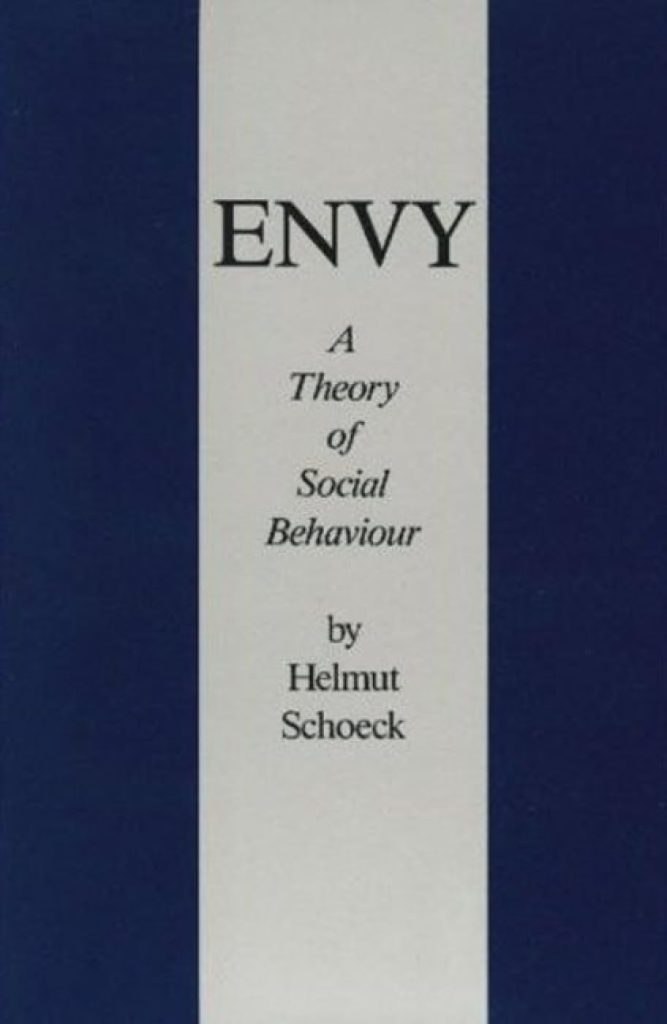
Part sociological theory, part political tirade, I found Schoeck’s analysis of envy in society to be interesting and provocative.
Schoeck argues that envy is caustic, and all functional societies learn to suppress it to some extent. By discouraging individual effort and achievement, envy holds back not just productivity and wealth, but even ordinary virtues as people don’t want to attract the “evil eye” of their neighbors’ envy.
Schoeck also argues that envy, as an emotion, doesn’t function the way class-conscious political organizers would like it to. We are much more envious of small differences among our close associates than we are of large gaps between us and people far away. One can think of the Cultural Revolution in China where the brunt of the malice was borne not by ruling elites, but by schoolteachers, small landowners and other people just slightly better off than others in their local villages.
Although the targets of Schoeck’s tirades against a politics built on envy are largely left-wing, it was hard not to read a similar sentiment into much of the right-wing populism sweeping the world today.
Although we might like to think we’ve matured into a culture that can debate the trade-offs between growth and equality, or environment and economy, Envy is a potent reminder that, in many ways, we’re still a society of children upset that the kid next door has a slightly nicer toy than we do.
2. Infinite Powers by Steven Strogatz
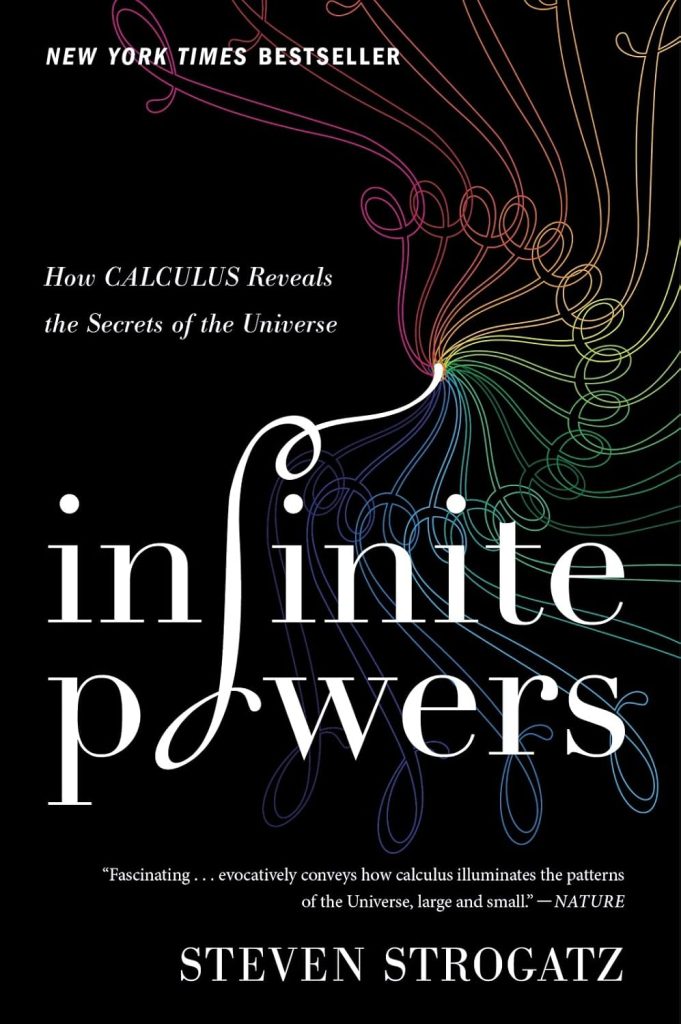
A fascinating book on the history of calculus.
I really enjoy Strogatz’s work, especially his class on chaos theory. This book, looking at the history of one of mathematics’ crowning achievements is also great.
One minor quibble I have is that Strogatz seems almost to want to bend over backwards to convince the reader that calculus is important. It’s almost as if a pushy editor told him that most people find calculus boring and to amp up the practical examples to maximize interest. I find it hard to believe that anyone whose eyes glaze over at the thought of advanced math would bother to read this book, so I find the efforts to hype the subject somewhat unnecessary.
3. The Fragility of Goodness by Martha Nussbaum
Life is fragile, and we often fail to do the right thing, or to get what we want. That much is well understood. But are there situations in life where it’s impossible to do the right thing? Times we’re left with no good options, and all choices inevitably involve sacrificing a dearly held value?
Nussbaum argues that there are, and the ancient Greek tragedians understood this to be a part of the human condition. Their works are tragedies not because bad things happen to good people, but because people have no choice but to do things badly. Damned if they do, damned if they don’t.
Philosophers since Plato have been on a mission to reorganize our interior life so that such tragedies are impossible, to provide a clear and consistent ordering of human values so that there is always a correct decision. From Socrates’s pull away from the perceptible world into the world of pure ideas to Bentham’s utilitarian calculus which measures all human values using a single ruler, all seek to find some way to rid us of the painful possibility that many problems in life have no good answer.
4. Who We Are and How We Got Here by David Reich
Recently, geneticists have been able to extract DNA sequences from the skeletons of ancient humans. By sequencing that DNA and comparing it to other archeological specimens and modern-day human beings, we are getting a much richer picture of our ancestry than ever before.
There’s a tendency to view our current cosmopolitan age as an aberration. To assume that, until recently, people lived largely where they settled after the initial human migrations out of Africa. That Chinese people are from China, Europeans are from Europe, and First Nations people in the Americas settled roughly where they landed after crossing the Bering Strait tens of thousands of years ago. In this view, our multi-ethnic societies with mixtures of ancestral ethnic groups is highly unusual.
Reich’s work shows that the past was a far more interesting place than we realize, and that human history was one of frequent mixtures. While we have no written records from these times, our genomes tell stories of mass migrations, continent-scale conquests and repeated returns.
5. The Myth of Sisyphus by Albert Camus
“There is but one truly serious philosophical problem, and that is suicide.” To Camus, life is obviously absurd and meaningless. The question is whether it’s still worth living a meaningless existence.
Camus argues that it is, asking what it would be like to create art that, fundamentally, does not matter. He argues for a kind of experiential gluttony, maximizing one’s experiences, treating living itself as an act of rebellion in the face of an uncaring cosmos.
Sisyphus, the figure of Greek myth whose punishment by the gods was to spend eternity repeatedly rolling a boulder up a hill only to watch it roll down, need not be suffering. Camus argues that Sisyphus possesses something that those of us still attached to finding meaning in life lack, a true understanding of his plight. And from that understanding, he has freedom.
Camus is provocative, but his solution seems psychologically implausible for me. I believe we are deeply teleological, goal-directed creatures. To live without purpose is an anathema. What needs reforming is not our innate psychology, but an idea of meaning that can accommodate a universe that does not provide eternal purposes.
6. The Perfectionists by Simon Winchester
The modern world is built on an idea: precision. By making things ever-more exactly, we can solve technological puzzles that ancients could only dream of. Winchester takes the reader on a tour through the history of precision, beginning with the first precision-machined cannons, milled to within about the width of a coin, to the lithographic processes used to make high-end computer chips, offering precision to within a few atoms.
One of my favorite stories in the book compares Rolls-Royce and Ford automobiles. While Rolls-Royce was famous for their exquisite craftsmanship, it was actually Ford’s Model T that was more precise. The reason was simple: Ford needed to build all the cars with identical, interchangeable parts. Being unable to fiddle with the pieces until they lined up perfectly meant that each part had to, on its own, be much more perfect than any component of a hand-crafted automobile.
7. The Marginal Revolution by Tyler Cowen
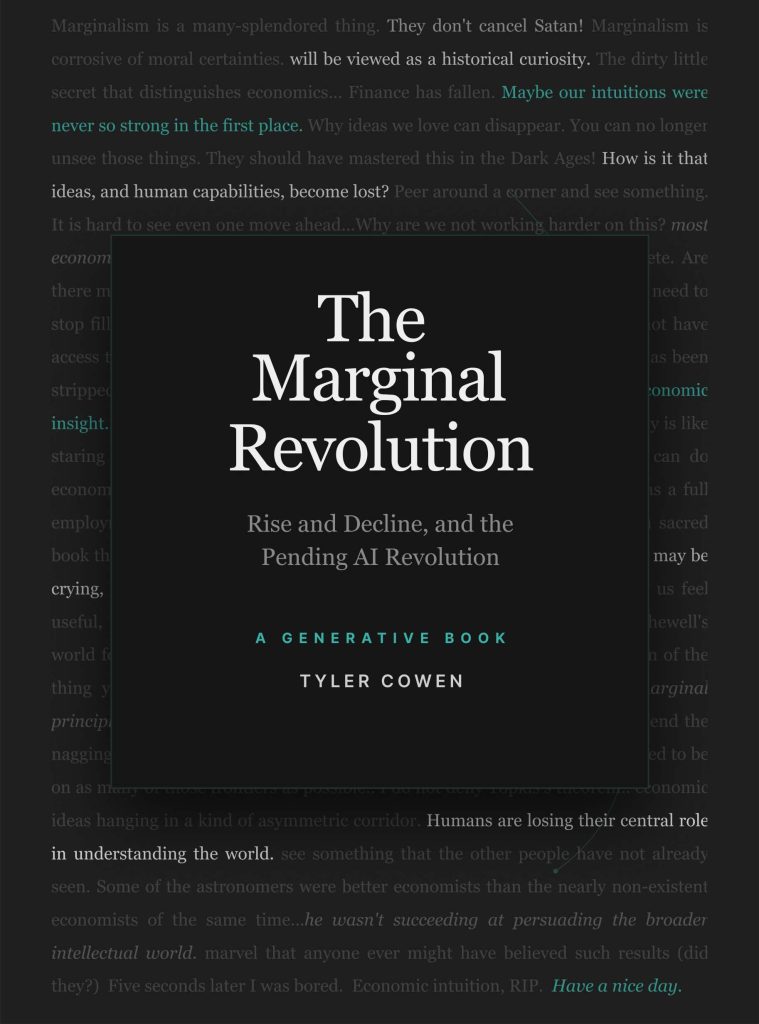
This book was billed as a new kind of book on generative AI. Cowen even went so far as to build a companion website that allows you to ask the book questions. I didn’t do any of that, though, and simply read the Kindle edition of the book start-to-finish.
Cowen offers a history of marginalism, or the theory that the right way to analyze a decision is not to ask how much something costs on average, but what it costs you to do one more of something. Consider the famous diamond-water paradox. Water is necessary for life, so its value must be immense. Diamonds, in contrast, are mostly useless baubles, so they shouldn’t be very valuable. Yet water is cheap and diamonds are expensive.
Marginalism helps explain this phenomenon by pointing out that the price of water doesn’t come from its total value to you (which is indeed very high) but its marginal value—i.e., how much more one glass of water is worth to you. And, if you aren’t very thirsty, the answer might be not very much. Water is abundant, so the marginal value is low compared to the supply.
Cowen argues that marginal thinking has been enormously productive for economics, but its centrality to the discipline is waning. Price theory, which makes marginalist principles central, is out of favor compared to econometrics and other sophisticated mathematical techniques. One might even say marginalist thinking is declining on the margin.
8. Catch-22 by Joseph Heller
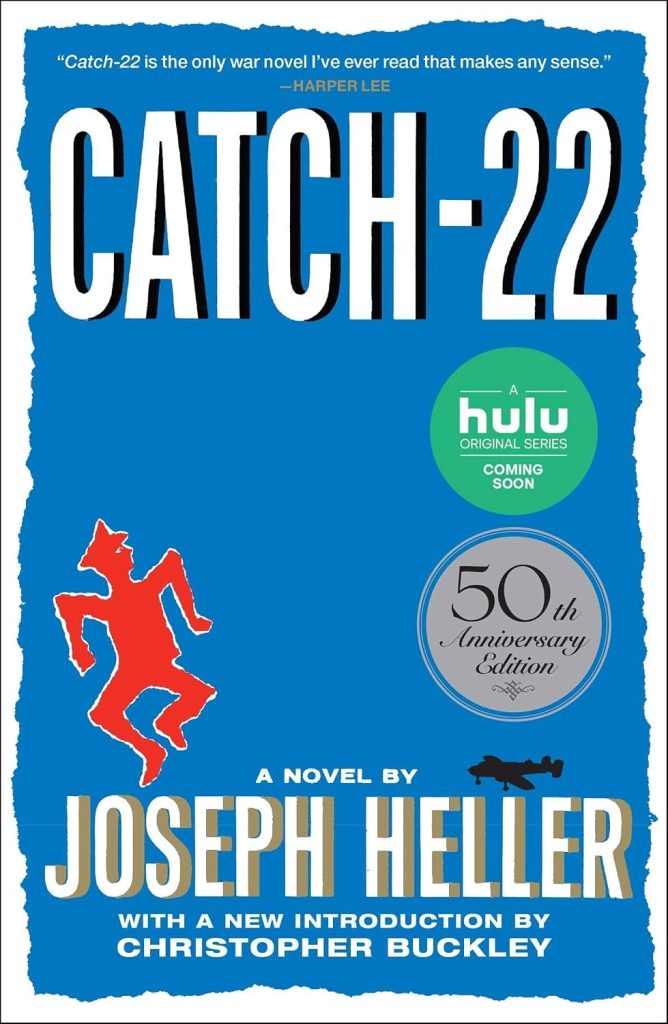
This may be the funniest book I’ve ever read. A satire on war, bureaucracy and the paradoxes of life, the eponymous Catch-22 refers to a fictitious rule for bomber pilots who wanted to get out of combat duty:
There was only one catch and that was Catch-22, which specified that a concern for one’s own safety in the face of dangers that were real and immediate was the process of a rational mind. Orr was crazy and could be grounded. All he had to do was ask; and as soon as he did, he would no longer be crazy and would have to fly more missions. Orr would be crazy to fly more missions and sane if he didn’t, but if he was sane he had to fly them. If he flew them he was crazy and didn’t have to; but if he didn’t want to he was sane and had to. Yossarian was moved very deeply by the absolute simplicity of this clause of Catch-22 and let out a respectful whistle.
The whole book is full of amusing little observations about the absurdities of life:
He was working hard at increasing his life span. He did it by cultivating boredom. Dunbar was working so hard at increasing his life span that Yossarian thought he was dead.
The Texan turned out to be good-natured, generous and likable. In three days no one could stand him.
McWatt was the craziest combat man of them all probably, because he was perfectly sane and still did not mind the war.
The case against Clevinger was open and shut. The only thing missing was something to charge him with.
Morale was deteriorating and it was all Yossarian’s fault. The country was in peril; he was jeopardizing his traditional rights of freedom and independence by daring to exercise them.
Nurse Duckett found Yossarian wonderful and was already trying to change him.
I haven’t always been motivated to read many classic works of fiction, although I seldom regret reading them. Catch-22 reminds me that fiction is good, not just for entertainment, but for the kind of thinking it stimulates.
 I'm a Wall Street Journal bestselling author, podcast host, computer programmer and an avid reader. Since 2006, I've published weekly essays on this website to help people like you learn and think better. My work has been featured in The New York Times, BBC, TEDx, Pocket, Business Insider and more. I don't promise I have all the answers, just a place to start.