Work, Retire… Then You Die.

Entry added on Thu, June 19, 2008

.

« How Much Stuff Do You Need? || Friday Links 08-06-20 »


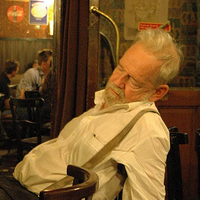
OldMan.png

“The years go by faster as you get older.” This is a piece of experience I’ve often heard from people who have more years than myself. The idea being that, as you get older, your lifestyle becomes more fixed. Going from 17 to 21 is a much bigger change than 40 to 44.

Does it have to be that way?

Recently, in my article about living a digital lifestyle, I talked about the benefits that could come from not being dependent on any location. You could travel around the world without having to spend a fortune and derail your career.

But many of you commented that a completely mobile lifestyle would soon be pretty shallow. You would visit many places without having a home, building deeper relationships would be difficult and you would miss out on the benefits of staying in one place.

I think part of these fears stem from the belief that you will have the same lifestyle at every point in your life. This comes from the mythology in our culture that you need to settle down, get a job and live basically the same way from 25 until retirement.

Why Stay Married to a Lifestyle?

In past articles, I’ve contrasted a digital lifestyle (which involves few possessions, complete freedom and lots of traveling) to the typical suburban lifestyle which requires vacation days to leave the country. I’ve been contrasting the two as if you could only live one or the other. But why can’t you lead both?

I think part of the time compression I quoted at the start of this article can be attributed to having a fixed lifestyle. When you are attached only to one mode of living, you fall into habits. Change becomes harder to do and the years blend into each other. Until the promise of nanotechnology extends the human lifespan to hundreds of years, why cut it short by living 30+ years on repeat?

Vertical and Lateral Growth

In past articles, I’ve tried to split up improvement into vertical and lateral directions. Vertical growth coming from setting goals, productive work and doing more within your field. Lateral growth coming from getting outside your comfort zone, trying new things and exploring completely different fields. I think people need both to be happy.

But I don’t think the vertical and lateral growth directions work best when you have a 50/50 mix of the two. I believe you’re better off if you try to focus on one direction at a time. Spend a few years working on becoming the best and then spend a few years exploring the world. How do you accomplish these cycles if you’re living a fixed lifestyle that doesn’t change from year to year?

I’m not sure that you can. An unfixed lifestyle gives you the flexibility to switch between vertical and lateral every few years.

What Keeps Lifestyles Fixed?

I’m a young guy, so I haven’t had the experience to know what specific obstacles keep people stuck in the same lifestyle year after year. But I have a few ideas:

  • Jobs. Work keeps you in the 9-5 grind until retirement. Although there is some employment flexibility, this is a big reason I feel entrepreneurship and freelancing will be the only ways to go for people seeking an unfixed lifestyle.
  • Children. Having kids often keeps people in a fixed lifestyle. But I wonder whether keeping stability for children is the reason or excuse for staying fixed. I know people who raised well-adjusted, happy kids who were able to break away from their lifestyle for longer than a vacation.
  • Habit. Probably the biggest reason for staying fixed is routine. It is way easier to do the same thing, day after day, than it is to break your habits. I’ve been living in a new place for only two months and already habits have been established. I can only imagine the force this has after 15 years of conditioning.
  • Fear. It’s more comfortable to do what has worked before. Your lifestyle doesn’t have to be perfect to keep you from wanting to adjust it.
  • Marriage. If your spouse is in a fixed lifestyle, you may feel compelled to stay fixed as well.

These are just a few of the forces keeping people into the same routines every day. I’m sure you can think of others.

What’s the Cure?

I’m not sure what the perfect solution for an unfixed lifestyle is. But, based on observation, I’d say the most important thing is having the motivation to adjust every few years. If you don’t see a problem with spending half your life in exactly the same fashion, you won’t have any energy to change it.

I’m a goal oriented person by nature. While I can be spontaneous, I work best with a plan. My strategy for staying unfixed is to always have ideas for the next venture or adventure. By keeping these on the to-do list, I have a smaller chance of settling into habits because of fear or routine.

I don’t want to have to tell my kids that the years speed up as you get older. There are only so many of them, so why live on autopilot?


StumbleUpon It!

Other Entries...

10 Comments »

  1. RuthDemitroff said,

    June 19, 2008 at 6:27 pm

    17-24 is not nearly as huge a shift as 55-60. Youth presents infinite choices but the general pathways are discernable. If one chooses to have a career, a home, and raise children - the next 30 years are a blur of demands and responsibility. One day you look up and the kids are mostly independent, the career has peaked, the housing is ridiculously inappropriate for 2 people and you receive an invitation to a pre-retirement seminar. I don’t even know what words to type into google to find bloggers dedicated to pre-retirement choices beyond financial planning. It’s like being 17 but instead of choosing a maze, you are given a scythe and a cornfield and the task of creating whatever maze you are capable of imagining.

  2. Jurgen Wolff said,

    June 20, 2008 at 1:45 am

    I hate to tell you this, but not being in a rut doesn’t save you from the phenomenon of time seeming to go by faster and faster as you get older. I travel around the world and divide my time between two cities in different countries, have several different strands to my career, attend classes and workshops in new topics that I want to learn about, have no kids…and still time seems to whizz by much more quickly than it used to.

  3. Dave Fowler said,

    June 20, 2008 at 2:11 am

    Scott,

    Your title is great. It’s so true. I see it all around me. The pattern is repeated again and again!

    I started out writing a response suggesting that your idea of freedom to live an unfixed lifestyle was different to mine, but I’ve changed my mind.

    I actually want to live in a fixed location. My home is my castle – somewhere to retreat when I want to feel secure, when I want touch base with my version of what makes sense to me. It’s almost like resetting my gyroscopes.

    When I’m good and ready, and feel motivated to do so, I’m happy to venture out and explore, but it’s not long before I want to be back at home with what I know and with the people who make me happy – my family.

    I think the point is that I’d like to be free to choose where my castle is situated, and not have that location dependent upon a fixed place of employment.

    Along with this comes the freedom to choose how to spend my time - and perhaps this is the most valuable freedom to me at this stage in my life (raising children).

    Now that I’ve found the courage to leave my job, I’m able to spend much more of my time with my children – I actually feel I’m living a life, rather than just existing. I feel that I’m part of their life too, not just some bit player who drifts in and out.

    Whilst I believe that I’ve now broken free of the work, retire, die mentality, I’m looking for a way to support my desired lifestyle and I love the idea that a digital lifestyle may be possible for me.

    So, I think any differences in your idea of an unfixed lifestyle (and the freedoms that such a life entails), and my idea of an unfixed lifestyle, is in the choices we make… for example you may want to live in Europe for a couple of years, whereas I would like to visit Canada for a just a month before returning home.

    The important thing is having the freedom to choose.

    A great article Scott. It has really made me think. In fact, having written my response, I haven’t stopped thinking and may well return to revise what I’ve said here. Don’t worry, one day I’ll know my own mind!

    Dave.

  4. Diego said,

    June 20, 2008 at 9:47 am

    I couldn’t wait to read the responses to this post and here’s why; humans are at least partially dependent on that ‘lizard brain’ you mentioned and that brain wants security. Security frequently comes from having ‘territory’. That territorial imperative, I believe, is what holds up anyone who wants an ‘unfixed’ lifestyle. What most people don’t realize is that lizard brain can be satisfied with anything at all as territory; my favorite example is the Rosebud idea in the film Citizen Kane, and that was even more primitive than what you are suggesting people should develop … independence!

    I love this blog!

  5. Scott Young said,

    June 20, 2008 at 10:37 am

    Jurgen,

    Perhaps, but we can always try, can’t we?

    Dave,

    Awesome comment. Thanks for posting.

    -Scott

  6. kei said,

    June 22, 2008 at 12:56 pm

    Can you write a piece on how to keep on track and follow through on projects? Or even how to do this throughout the day? I often get distracted throughout my day. Then again, if you don’t have this problem, then you may not want to write about it…

  7. kei said,

    June 22, 2008 at 12:57 pm

    By the way, I am making a post request because I find your postings very helpful, clear, easy to understand and useful. Thanks!

  8. Scott Young said,

    June 23, 2008 at 11:15 am

    kei,

    Check the archives for a post titled “How to Start Projects You’ll Actually Finish” (or something close to that). I’ve written before about the art of completing projects. “The Art of the Finish” is another great entry on this site written by Cal Newport.

    -Scott

  9. Naomi said,

    June 30, 2008 at 2:29 am

    Scott, great post (great site, in fact!). I’m all for living the life you want to live, and I hope you really go for it for that reason but I think the latest research suggests that the “time goes faster as you get older” phenomenon is more to do with brain chemistry than lifestyle. From this documentary: http://www.bbc.co.uk/bbcfour/documentaries/features/time1.shtml I learned that we all have a “super chiasmatic nucleus” in our brains that controls how we perceive the flow of time. As children, it starts off very revved up - ask a group of 5 year olds to close their eyes and raise their hands when they think one minute has passed, and you’ll get a forest of hands after 20 seconds. But it slows down over our lives - ask a group of 60 year olds to do the same test, and they won’t raise their hands until 2 minutes have elapsed. From about 20 to 30 we’re bang on 1 perceived minute = 1 elapsed minute. You can try the test yourself to see where you are!

  10. Scott Young said,

    June 30, 2008 at 7:01 am

    Naomi,

    I hadn’t heard that. Perhaps there is more to the question than I thought.

    -Scott

Leave a Comment

Before you write a comment, make sure it fits within the comment policy.