I’m 20

Entry added on Tue, August 19, 2008

.


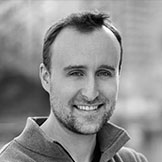
Today is my twentieth birthday.  I’ve made it an annual habit of writing a rather self-indulgent post about myself on my birthday.  I’m going to take that opportunity to write about my last year, things that I have improved on, setbacks and future goals.  If you were hoping to read an article about productivity or self-improvement, you can skip this post and I’ll have another entry later in the week.

Last year was a great one.  There weren’t as many changes as the year before (when I moved to University) or the year before that (when I started this blog), but I still reached some important milestones.  Most of all, I had a lot of fun, and if you can’t do that, what’s the point?

School

In University, I kept up my average of between A and A+ for a GPA.  However I’m starting to take more courses which are based on participation and projects, which means keeping a spotless GPA will take more work.

Honestly, grades aren’t that important to me.  Although I’ll work on keeping them (a guy who wrote a book on studying, should still have a high GPA), I consider learning something valuable to be more important.  My lifelong goals are for entrepreneurship, where GPA and paper degrees aren’t going to matter, so grades have never been a focus of my effort.

Fitness

I’ve kept up with regular exercising and gym-going.  Aside from a sprained wrist in March and my bout with mononucleosis a few weeks ago, I’ve been in great shape (far better than 4-5 years ago).  I’m still making improvements in fitness, but it’s more about being healthy and staying active than reaching a specific goal.  I’m happy with my physical health, so I mostly want to keep it that way.

Dating

I’ll keep my dating life private, to protect the innocent, but I’ve also been happy with this in my last year.  It can sometimes be hard to find the right balance between social life/relationship and your other goals, but it is worth the effort.  I’m still figuring out a lot of these questions myself, so I wouldn’t expect any articles on relationships for awhile.

Finances

A big area of improvement was in running this website.  I started this with the goal of earning a livable income.  Perhaps that’s a little presumptuous for a then-17-year-old, but I wasn’t going to wait until I was thirty to start doing what I love.  This past year has marked the start where I’ve actually been able to enjoy the income this website earns.

One immediate benefit was being happily unemployed for this summer.  I worked the year before, to raise money for tuition and living expenses.  However, as I’ve been earning more with this website than an entry-level full-time job for the summer, I’ve been able to enjoy a fun and relaxing four months between classes.

My 2008 income goal was $20,000 before taxes.  Based on my income so far this year, I’m nearly on schedule.  I have some plans to hit the target before the year end.  The specific number isn’t that important, but I believe it marks an important step in being able to live entirely off the income from this website.

Reading

My reading (in terms of total volume) is not nearly as high as was a few years ago, when I was reading 70+ books in a year (I expect 30-40 this year).  Part of this can simply be explained by reading longer books.  I read several books nearing 1000 pages, whereas my previous reading habits focused on shorter books between 300-500 pages.

Another factor might have been my switch off Amazon books.  I decided to switch to the library to save money.  Unfortunately, even a large University library makes finding the book you want to read a pain.  Amazon may be more expensive, but I can read exactly what interests me.

Still the drop in reading might just be a side effect of the busier lifestyle I’ve taken on.

Volunteer

A big time investment for this summer and the upcoming fall has been volunteering.  I’m doing work as part of a fundraising team, getting corporate sponsorship for student events.  I’m also running the website for the Commerce Business Banquet, in November.  Although these take away time, there are a lot of rewards.  I’ve had a chance to learn skills that would be difficult to practice normally, and I’ve made many great friends I might not have otherwise.

Future Goals

Looking back is useful, but I’ve always been focused on the future.  I have some important goals, and there are many other experiences I want to get that don’t fit on a timetable.  As always, I’m going to continue working hard on improving myself, which I think is the most important step in reaching any other ambition.

Thoughts on Goal-Setting

A lot of my goal setting philosophy has changed from when I first started around 5 years ago.  When I started, I was intensely motivated to reach my goals.  And when a goal didn’t look like I would make it, I would work even harder to reach it.  Often this meant stressing myself out trying to make impossible targets.

I’ve since changed my perspective.  Working hard and persisting towards goals is important.  Having goals is especially important, even if you can’t reach them.  But, a lot of life is outside my control.  Stressing over goals that you couldn’t reach isn’t the point.  The point of having goals is to stay focused, motivated and feel alive.  I feel if I can accomplish that, I’m not going to worry that life isn’t conforming to my timeline.

I’ve found that if you set goals, come up with a strategy, and work your ass off, you tend to reach them.  However, it often isn’t on your deadline, so you need patience to keep going even when progress is slow.

Going Digital

My biggest goal (although it’s more a lifestyle than a goal) is to live completely off my laptop, and travel around the world learning new things and having new experiences.  I expect that this will need around $30,000-$40,000 per year to be comfortable.  I’m sure I could do it with less, but this is my comfort zone.

So my first goal is to move my income from slightly below $20,000 per year to twice that.  I have another two years of University with my degree in commerce.  I’ve also been considering another degree in computer science, an passionate interest of mine for the last several years.  I’m planning on reaching that ambitious financial goal by the time I’m done University.

My ideal lifestyle needs more than just money.  I think it needs a lot of other skills and qualities that are hard to pin down.  Languages, travel experience, being socially outgoing and independent are all just as important.  I’m looking into doing a student exchange in another country to get some experience before I graduate.

I don’t have any other big goals that I’ll be working on in the near future.  I think splitting my focus between many different goals will mean that I won’t accomplish any of them.  And a digital lifestyle requires many minor goals across different areas, so I’m not worried that part of my life will be neglected to reach my ambition.

Overall Thoughts

All of this doesn’t really matter.  What matters is that I get to wake up each day, do what I love, learn something and feel like my energy was invested wisely.  I’m lucky enough that I get to do this most of the time.  I definitely have bad days, and things are never perfect, but most of the time, I’m having fun.


Subscribe to Scott H Young

How to Become a Holistic Learner

Entry added on Wed, August 13, 2008

.


Studying.png

Over a year ago, I wrote an article about how I have managed to ace high-school and university exams with very little studying.  The article became one of the most popular articles on the website, and I’ve since written two e-books continuing the core idea: holistic learning.

Since writing the initial article, and the two follow-up books, I’ve received a lot of reader questions.  I’d like to answer some of the main ones here, including the most common question I get asked, “How do I become a holistic learner?”

Question #1: “It’s been a year since you wrote How to Ace Your Finals Without Studying, do you still write exams without studying?”

No, I don’t write exams without some “studying”.  Although I have done this successfully in the past, it can be a bit of a gamble.  With absolutely no review period, you no longer have a backup in case you missed something the first time.  I wouldn’t want to skydive without the backup parachute, and I try to avoid going into important exams without some confirmation I haven’t missed anything.

For most of my exams I have a short test run of typical questions or concepts to make sure that I understand everything.  I’ll also nail down concepts that are harder to learn holistically and need a bit of memorization.  For some exams, I’ve also taken practice exams as an extra step to make sure I wasn’t tricked into overconfidence.

Although this sounds like a pretty typical studying routine, I’d like to point out what I don’t do:

  1. Learn things before the exam.  Holistic learning is about understanding ideas at a deeper level.  I’m definitely not learning ideas for the first time when I sit down to study.  Studying should be strictly review.
  2. All-night (or even all-day) cramming.  My last term in university had five fairly difficult exams stuck into a one week period.  During this week I did all my regular activities and had a fairly relaxed review period.
  3. Repeat the same concepts.  One or two reviews should be enough to know something for an exam.  If you need to do review questions of the same concepts several times, your learning could probably be more efficient.

Learn More, Study Less isn’t about eliminating studying entirely.  But it’s about becoming far more efficient in your studying habits and the way you learn, so that you don’t need to repeat the same ideas over and over again.

Question #2: “Can I use holistic learning with subject X or Y?”

Holistic learning isn’t a technique.  It’s a broader strategy of how to approach learning, and a philosophy of how to learn the most with the least amount of strain.  While I can’t guarantee that this philosophy will work best for every subject, almost every learning task I’ve encountered fits well within this perspective.

Since holistic learning isn’t a technique, you need to find techniques that help you learn holistically.  I wrote about nearly a dozen of these in Learn More, Study Less, but they are just a starting point.  If you have a holistic learning perspective, it isn’t hard to come up with studying tricks that make sense.

So the simple answer to the question is, yes, holistic learning will work with subject X.  You might have to change your techniques to match the type of information and your learning style, but the overall strategy should be the same: make links between ideas to remember them.

Question #3: “How do I become a holistic learner?”

I didn’t answer this question in my initial article.  I spent a lot of time describing what holistic learning is, but not as much time describing how to do it.  I’ve had many people read my article on the subject, but still aren’t sure how to apply it.  Much of Learn More, Study Less is devoted to answering this question, but I’d like to offer a simple answer.

You already are a holistic learner.  You automatically learn by connecting ideas.  This isn’t something foreign to you, it’s something you’re doing all the time.  Holistic learning is about taking that natural habit of making connections between ideas to the next level.  If you’re aware of how you are making connections, you can do more of it.

Think back to a subject you were really interested in.  A class where you couldn’t be distracted and were completely engaged in what was being said.  Find a specific time and try to imagine it.  Now ask yourself what you were doing?  Were you:

A) Writing down what was said, word for word.
B) Thinking of applications for the ideas, finding gaps in your knowledge that these new concepts filled or asking yourself about how these ideas fit together.

Obviously, if you really enjoy the class and the subject, the ideas come together.  You find connections with your other interests and you ask deeper questions about the topic instead of just copying it into your notes to be memorized later.  You were learning holistically.

This applies when you’re reading a book.  If I’m reading a great book, I’m making tons of connections between the material in the book and my life and interests.  I often need to stop reading because my own train of thought is breaking away from the page and I’m having trouble reading and thinking at the same time.

I don’t think holistic learning and enthusiasm for learning are the same thing, but they are definitely related.  If you’re very interested in a topic, that tends to create the overflowing of connections you need to learn holistically.  Similarly, if you’re learning with many connections, what you learn becomes more interesting.  It’s a positive cycle where holistic learning and engagement strengthen each other.

So, how do you use this?

People have asked me, “What should I make connections for when I’m learning calculus?”  These people don’t get it.  Holistic learning isn’t about forcing connections, it’s about finding connections.  It needs to be like playing in a sandbox, building something creative.  Don’t worry about whether the connections make sense or are the “best” connections to make.  Focus on exploring ideas and see what they connect to.

This works on subjects you find incredibly boring too.  As part of my degree in commerce, I’ve taken classes is accounting (my major is entrepreneurship).  I hate accounting.  But that doesn’t mean I can’t use that creative enthusiasm to my advantage.  Whenever I encountered an idea, I started with the attitude that there were many different connections, I just had to look for them.  Sometimes the connections weren’t helpful, sometimes they were.  But building those connections helped me remember something I would have otherwise forgotten.

Holistic learning is as much an attitude as it is a method.  When you learn a new idea, begin with the perspective that there are an infinite amount of applications, metaphors or descriptions that can fit with this idea and everything else you know.  When you start with that attitude, you’re more open to the first few connections that fall into your mind.

Be childish again.  Kids make bizarre drawings all the time, that connect things they know together.  I think the emphasis on being mature and conforming to the group has stifled that original intelligence.  My notebooks aren’t filled just with exact copies of slideshow presentations, I add drawings and diagrams to help me bridge ideas.

In the start of my book, I wrote about how most people try to learn like a computer accepts data.  Transmit the input and store it in your brain.  Unfortunately, people aren’t robots.  Instead, make ideas vivid, messy and exciting.  Learn like a kid again.


Subscribe to Scott H Young

« Previous entries · Next entries »