Last week, I shared some of what has worked for me in motivating myself to exercise regularly. But, reflecting on it, I think “exercising regularly” could substitute for pretty much any kind of aspirational habit or goal. Finding the motivation to actually do things is often the biggest barrier we face, whether we’re learning a language, starting a business, studying for an exam or finishing a book.
This observation isn’t new. I’m certainly not the first to notice this problem, and this is far from the first time I’ve written about it.
But I thought I’d try to categorize, in general, what holds us back from doing things we want to do, but can’t seem to find the motivation to stick with. This doesn’t result in any quick fixes, but it does help us diagnose the problems we face and what the solutions might look like.
Motivation Problem #1: The Work is Too Unpleasant
Many of the things we have a hard time feeling motivated to do involve immediate pain or drudgery for potentially long-term or abstract benefits. Research suggests that our weighting of the present moment over the future self is a major cause of procrastination.
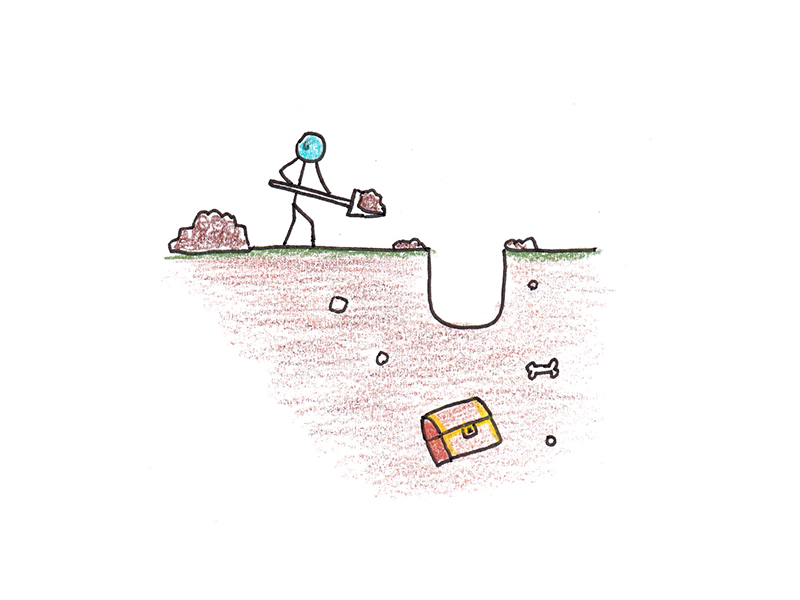
Sometimes this unpleasantness is unavoidable. If you need to go to the dentist to get a root canal, the next couple of hours aren’t going to be much fun—but doing nothing will only make things worse. Impulsiveness, or the propensity to weight the present higher than the future, is a major factor in such problems of willpower.
In other cases, the unpleasantness is at least somewhat malleable. For instance, a major factor I credit for my exercising more regularly is the fact that exercise becomes less aversive the more you do it. When you’re in great shape, exercising is fun (or at least less painful), so getting in shape forms a positive feedback loop.
In other cases, modifying the task itself can make doing it less unpleasant. You can change the environment, combine it with other rewards, make it easier, more interesting, turn it into a game or pair it with other activities you enjoy.
Motivation Problem #2: The Work is Too Scary
Fear and anxiety can undermine motivation when we anticipate pain, even if that pain is less likely or less severe than we imagine.
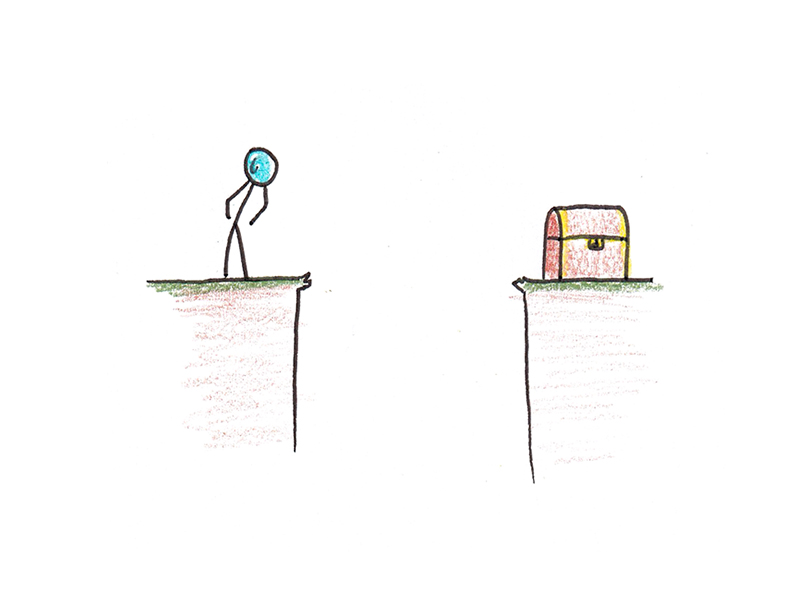
It’s probably best to distinguish anxiety from unpleasantness by the kind of belief we have about the task. Something might be genuinely unpleasant, but its benefits still outweigh the costs. There, the problem is impulse control and trying to tilt the balance in favor of our more prudential self.
In the anxiety case, the problem isn’t that the actions we need to take are necessarily unpleasant, but that we exaggerate how bad they’ll feel or the likelihood of a really bad experience. Here, the problem is courage, and we can solve that by exposing ourselves to the fear to undermine our irrational beliefs.
Since the problem here is that our beliefs don’t match reality, exposing ourselves to the anxiety-provoking situations and confronting the discrepancy between our expectation and reality is a powerful method for overcoming fears and anxieties. The fact that fears are often driven by unconscious threat-detection circuitry lends credence to the idea that we can’t generally talk ourselves out of these anxieties; instead, we require direct experience to combat them.
Motivation Problem #3: We Don’t Know How
Knowledge is often dismissed as a poor excuse for not taking action. After all, if we were really motivated to solve a problem, wouldn’t “learn how to solve the problem” be step number one?
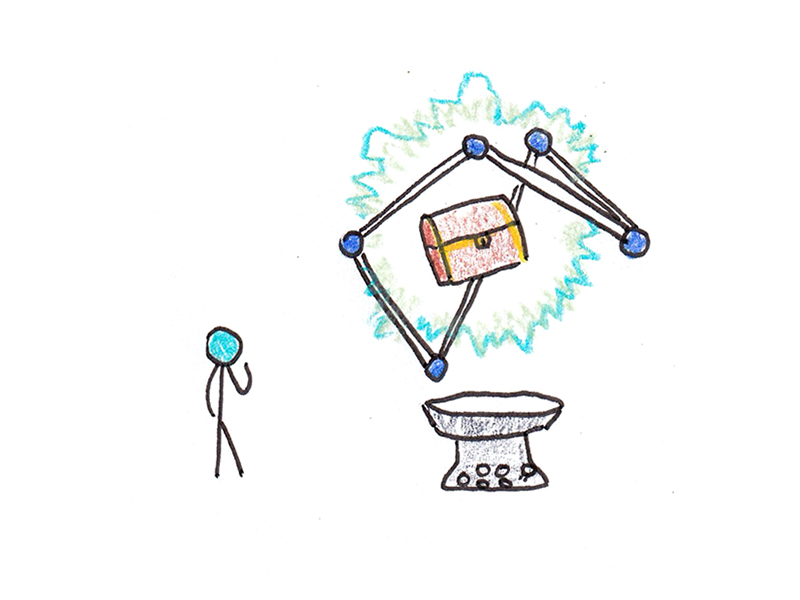
But lacking skill and knowledge can hold us back. Part of it is that ignorance changes our calculus of the effort required. If I’m not sure how investing works, I might hold off on saving money because I imagine a long project of learning about investing as a necessary prerequisite before doing anything with my money.
The bigger way know-how impacts our motivation, however, is when a lack of knowledge prevents us from even thinking about a kind of problem, let alone how to solve it. Knowledge often creates both the awareness of an opportunity as well as the means for reaching it.
For instance, knowing an inventor is a major factor in becoming an inventor yourself. No doubt this is partly because having contacts helps you succeed with your creations. But another big part is that knowing an inventor not only gives you knowledge about how to succeed in that career path, but even the idea that you could become an inventor in the first place.
Motivation Problem #4: We Don’t Believe We Can Do It
Our sense of self-efficacy is a major driver of our behavior. If we don’t feel like putting in effort will yield results, we’ll quite rationally hold back.
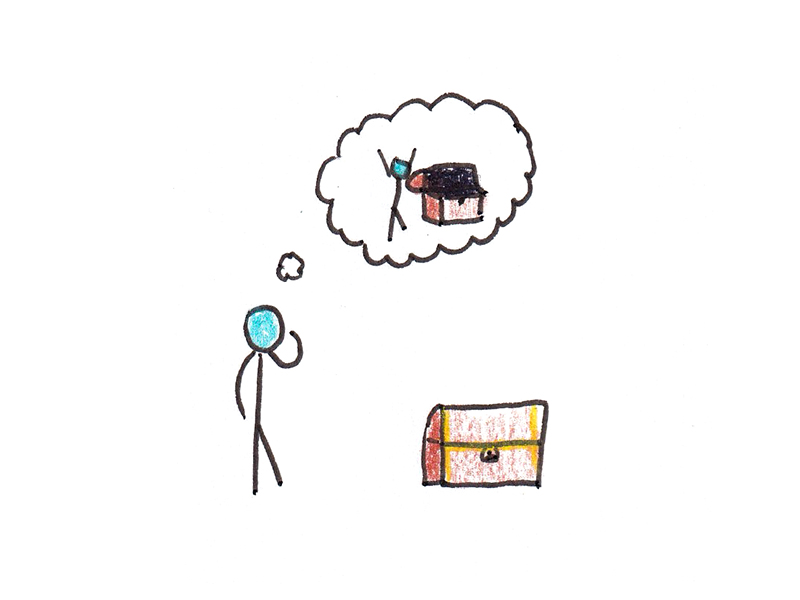
Yet self-efficacy is built through mastery experiences. So if we hold back, we can’t learn. If we can’t learn, we can’t build confidence. If we can’t build confidence, we’ll have low self-efficacy and remain stuck.
Still, I think low self-efficacy drives a lot of motivational challenges. The trick is figuring out how to get out of the loop of being stuck in our beliefs. In general, I’ve found two approaches that have worked for me.
The first approach is to apply a lot more focus and attention than the problem deserves. Basically, convince yourself that you’ll succeed through overwhelming force, and put in way more effort than the problem seems to merit. Then, when you start to experience some traction, it’s easier to shift into a more stable pattern of motivation and effort more commensurate with the value of the goal.
This works, but it has the Catch-22 problem of being difficult to apply when self-efficacy is really low. We need to believe that we can succeed with unreasonable effort, even if modest effort hasn’t been sufficient in the past.
The second approach is to start building from very small successes. Pick goals that seem super easy and doable, succeed at those and build up your confidence. Think of this as a behaviorally-motivated positive spiral: you try to do something that you can definitely do, you do it, and then you try something slightly harder.
This also works, but it has the limit that small successes don’t always build much self-efficacy for really hard problems.
Motivation Problem #5: We Don’t Value the Outcome Enough
Values are tricky. On the one hand, if we don’t value something, it’s rational not to be motivated to pursue it. In this case, we don’t value something enough because our beliefs about the benefits and costs don’t weigh things highly enough for us to focus on it. Failure to be motivated is simply a difference in priorities.
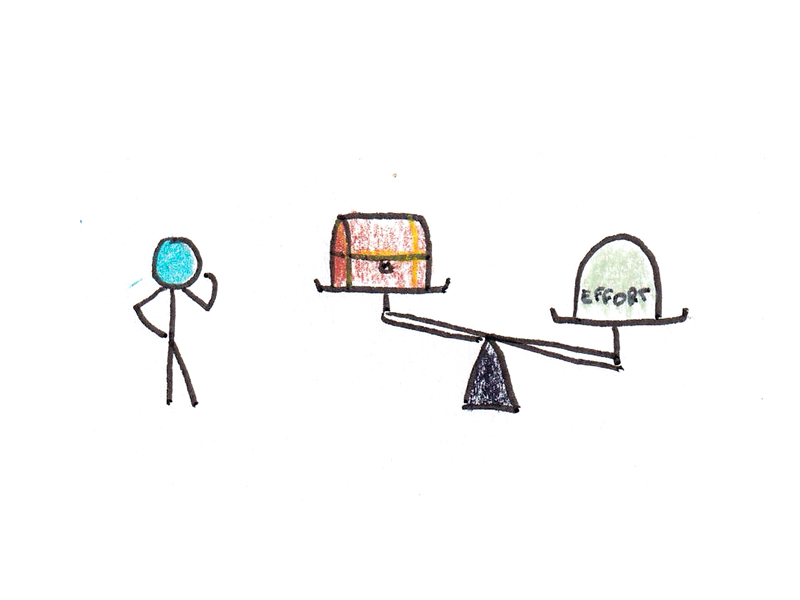
But a rational lack of motivation can still be ignorant.
For instance, if you’re a heavy smoker, but don’t think smoking is all that bad for you, or you think it’s only going to cause problems when you’re too old to make life worth living anyways—so why not have a cigarette?—then lacking the motivation to quit isn’t exactly irrational, but it is ignorant.
I’m not sure there’s a solution here, other than to say it helps to read broadly and stay informed about many topics. Motivated reasoning can lead us to discount information sources that present inconvenient truths, but if we’re sufficiently curious in the broad sense, we’ll probably stabilize on a responsible level of beliefs about the true costs and benefits of certain courses of action.
Motivational Problem #6: We Have an Incentive to Fail
Perverse incentives are a mainstay of pathological psychology stories. Consider a person who “fears success”, so they self-sabotage. Or a person who likes to be taken care of, so they don’t take care of themselves.
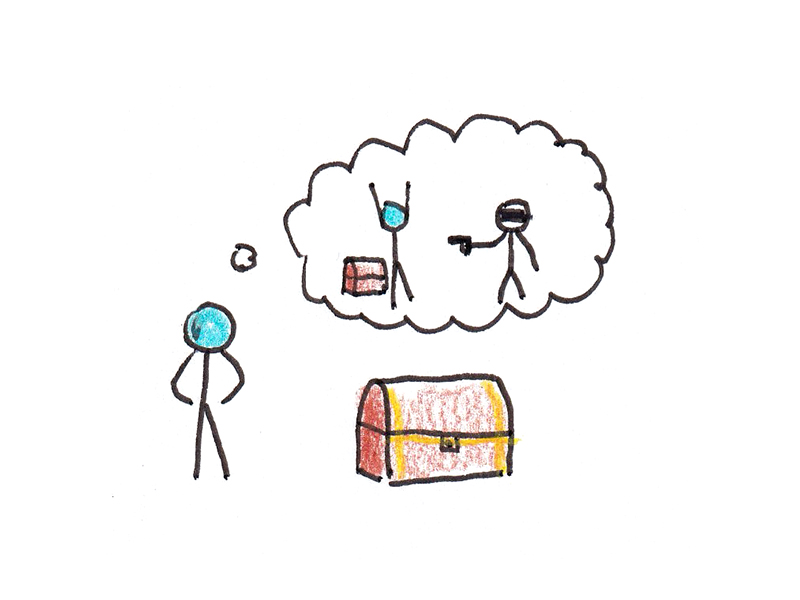
I tend to think these stories are exaggerated, and that the Freudian impulse that all behavior is really a repressed motive is not nearly as common as people may think.
However, perverse incentives can explain a lot of problems that we may be quick to blame on “motivation.” For instance, if you work a job where the only reward for working hard and getting your work done quickly is to be assigned greater tasks and responsibilities, then it’s unsurprising that the natural tendency is to throttle your effort. Or, if saving a lot of money means spendthrift friends and relatives needle you for a loan, it’s unsurprising if you aren’t motivated to save some of your cash for a rainy day.
Motivation Problem #7: It’s Simply Not a Priority
In isolation, of course we should exercise. And maintain our relationships. And keep a clean house. And eat healthy. And journal. And meditate. And focus on our hobbies. And also our careers. And community service.
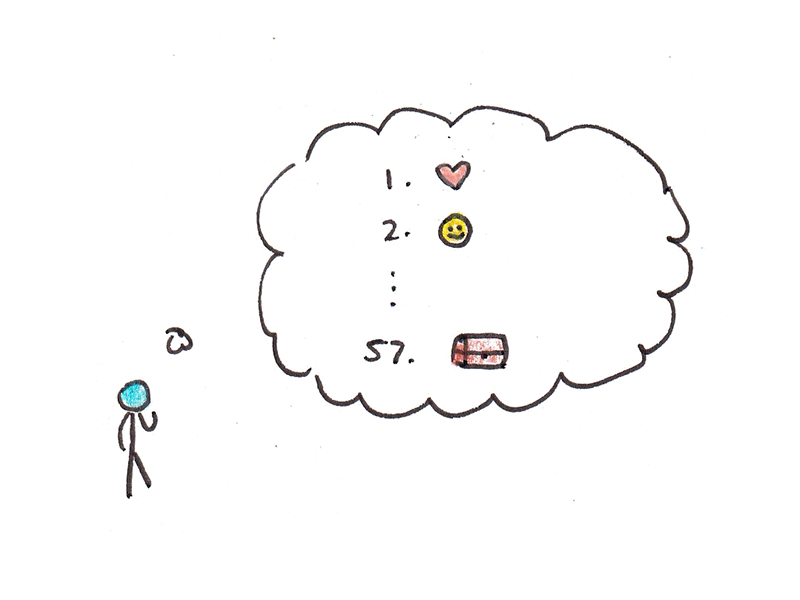
In short, many problems of motivation are not “failures” of willpower. They’re simply rational decisions to allocate our limited time, attention and effort in places that matter more.
Time, of course, is fixed. We can only ever spend 24 hours in a day. Thus, anything that has a fixed time commitment must necessarily crowd out other opportunities for that same slice of time.
Energy and attention are more malleable. But they’re still limited. This is one reason why habits can be effective. If a behavior requires the same time, but less attention or effort, it may be easier to “afford” compared to a new behavior which requires both time AND effort.
Still, in a lot of cases, our self-described motivational failings aren’t failings at all. They’re simply a rational prioritization of something more important.
What Do These Causes Have in Common?
The common denominator of all these causes is that they’re breakdowns of an otherwise-rational system that weighs costs and benefits in making motivational choices. We’re:
- Overweighting the present compared to the future. (Cause #1)
- Exaggerating the expected costs and downside. (Cause #2)
- Underrating our long-term ability to succeed. (Cause #4)
- Underrating the long-term value of success. (Cause #5)
- Faced with hidden costs. (Cause #6)
Only #3, which has to do with our knowledge of the problem itself, and thus the precondition to be motivated in the first place, properly lies outside of this kind of calculus. And, of course, #7 isn’t a problem at all, rather it’s a rational consequence of our having finite time, energy and attention.
None of these mean that problems of motivation are easy to solve. But they do suggest some diagnostic starting points if you feel you ought to have more motivation than you do towards a particular course of action. Tilt the equation in your favor, and you can motivate yourself to do anything you choose.
 I'm a Wall Street Journal bestselling author, podcast host, computer programmer and an avid reader. Since 2006, I've published weekly essays on this website to help people like you learn and think better. My work has been featured in The New York Times, BBC, TEDx, Pocket, Business Insider and more. I don't promise I have all the answers, just a place to start.