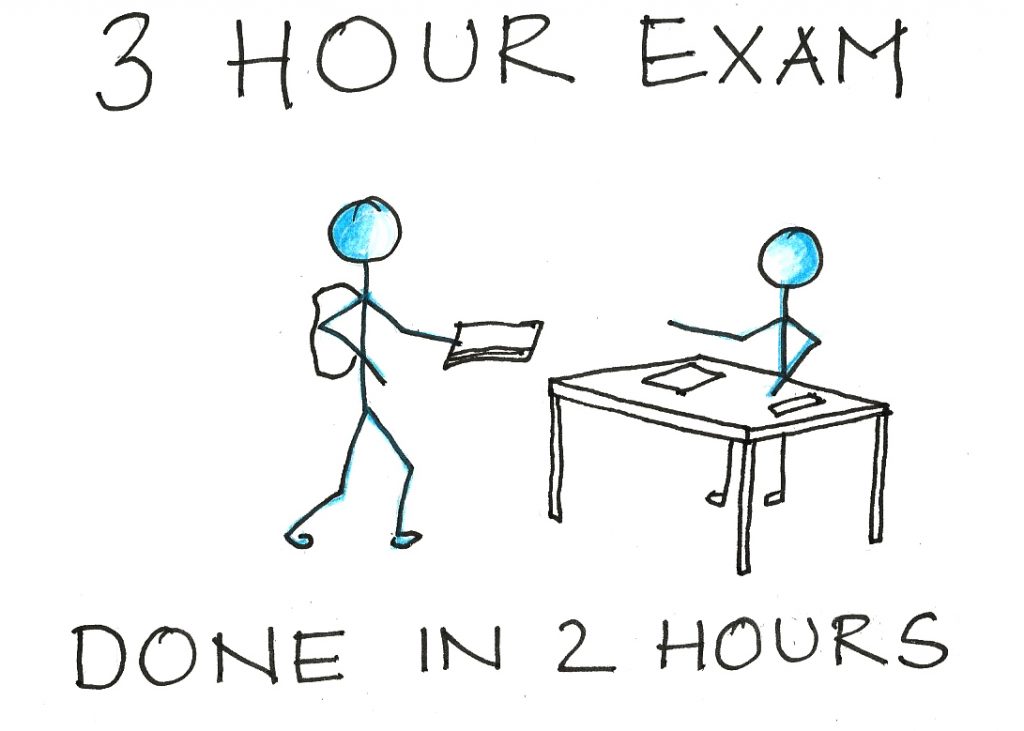
I’ve never been that keen on studying before an exam. I rarely study for more than a half hour, even for big final exams worth more than half my grade. When I do study, I usually just skim over the material and do a few practice questions. For some of my math classes I have yet to do a single practice question for homework. Most people study by cramming in as much information before walking into the test room, whereas I consider studying to be no more than a light stretch before running.
Despite what some might point out as horrible studying habits, I’ve done very well for myself in school. I had the second highest marks in my high-school class with honors all four years. My first term university marks were two A+’s and an A, for calculus, computer science and ancient Asian history, all courses with high failure rates. I also won a national chemistry exam for a three province wide district that I didn’t even realize I was writing until I was called in and told to get started.
It’s very easy to look at my successes and apparent lack of effort and quickly deem that it is an innate gift, impossible to replicate. I think this is bullshit. I believe that myself and anyone else who can produce these results simply has a more effective strategy for learning new material. With my system of learning, you only have to hear or read something once to learn it. Best of all I believe it is a system that can be learned.
Webs and Boxes
The system I use for learning I’m going to call holistic learning. But in order to fully appreciate what holistic learning is, you need to take a look at it’s opposite – compartmentalized learning. Virtually all learning is done somewhere between completely holistic and completely compartmentalized learning. Although people rarely sit exactly on one extreme, people who are close towards learning through compartments will need to cram and study for hours just to hope for a pass where people who lean more to holistic learning can often breeze through heavy course loads.
People who learn through compartments, try to organize their mind like a filing cabinet. Learn a new chemical equation, these people will try to file that information. Hopefully they will file it near some other chemical equations so that they will stumble upon it when they need to on the exam. Compartmentalized learners make distinct file drawers for science, math, history and language arts. Placing all the things they know into little boxes.
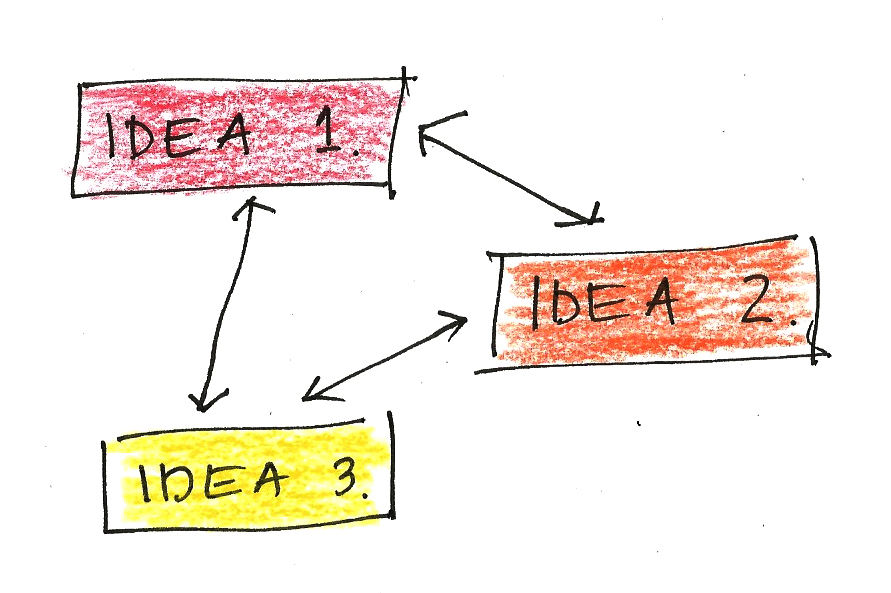
Holistic learning takes an opposite approach. Learning holistically is not done by trying to remember information by using repetition and force. Holistic learners instead organize their minds like spider webs. Every piece of information is a single point. That point is then consciously related to tons of other points on the web. There are no boxes with this form of learning. Science becomes literature which becomes economics. Subject distinctions may help when going to class, but a holistic learner never sees things in a box.
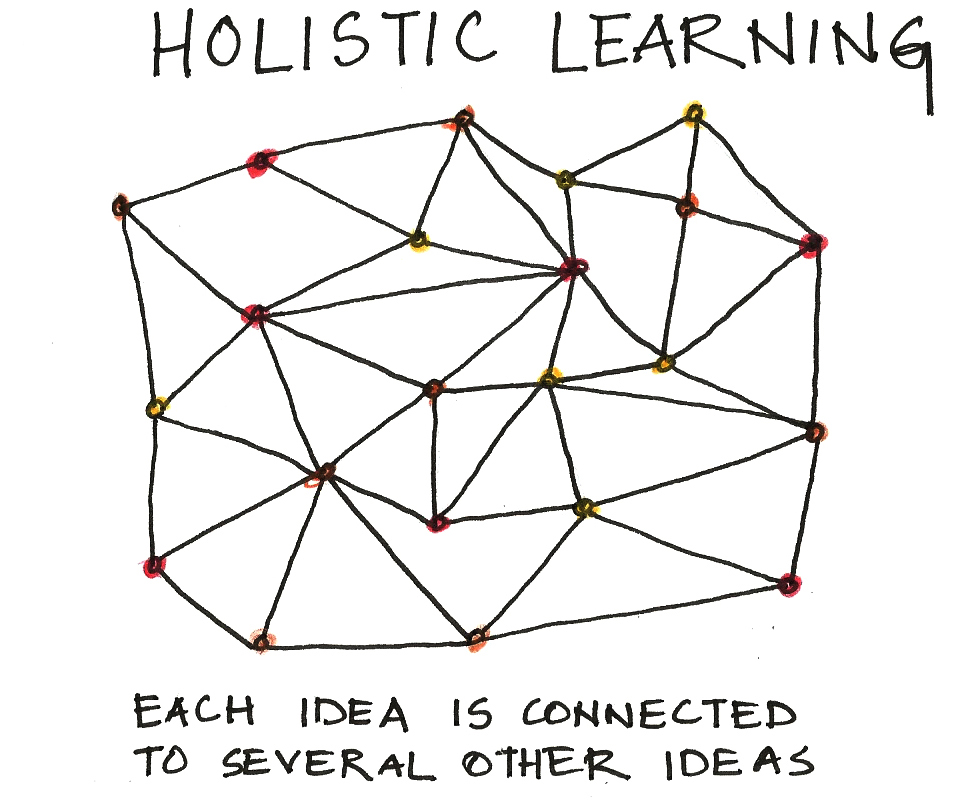
When it comes time for exams (or any practical application for your knowledge) compartmentalized learners have to hope that they pounded the information hard enough into their head so it might come up during the exam. Holistic learners do the opposite. Holistic learners only need to start at one point on their web, but they can use that web to feel around and find all the associated information they need.
The chemistry exam I won for three provinces I wasn’t even taught over half the information on the test. Because my web was so heavily interrelated, even when a node on the web was missing I had a good chance at guessing at what it contained. This meant that on a multiple choice test I could only understand a third of what the question asked and still be able to eliminate answers. Winning a test that you don’t actually know half the information on it sounds impossible, but not to a holistic learner.
Compartmentalized learning is an exercise in insanity. A comparable strategy would be if the users of the web didn’t hyperlink anything. So to find any information you just had to keep typing addresses into your browser, hoping that it would pop up. Studying for these learners is akin to setting up thousands of domain names that all lead to the same information, so that you will hopefully get to the right place by just guessing enough. Not only is it ineffective when exam time comes, it takes hours to put in place.
Very few people are purely compartmental learners. For most people they manage webs of information holistically to a certain degree. But unfortunately, their webs simply aren’t interlinked enough. Each subject usually has a fairly distinct web and each unit of information has only one or two associations. Like trying to surf the net when each page only has one or two outgoing links. Possible, but far from effective.
If you look at the structure of your brain, it will become immediately obvious why compartmentalized learning, organized like a computers file folder system, doesn’t work. Your brain is itself a web of neurons. Creating hundreds of associations between ideas means that no matter where you start thinking, you can eventually get to the piece of information you need. If a road is closed for some reason, you can take one of the hundreds of other side streets.
Maximizing Your Holistic Learning
Understanding holistic learning is one thing, putting it into practice is another. I’ve been learning very close to the extreme of complete holistic learning for so long that my web is pretty well interconnected. But if you haven’t been really interweaving your web, then the best way to improve your ability to learn is to start now.
Here are a few suggestions for how you can better interlink your web:
1) Ask Questions
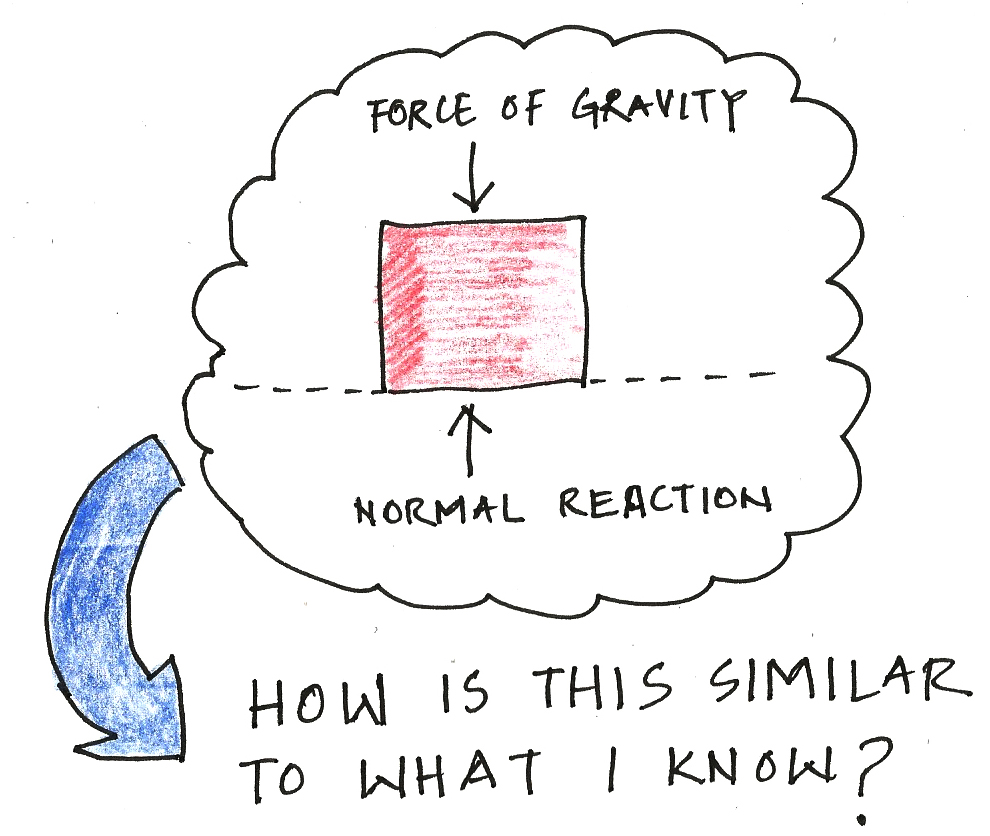
When you are learning something, you can make associations simply by asking yourself questions. How does this information relate to what we’ve been studying? How does this information relate to other things I’ve already learned? How does it relate to other subjects, stories or observations?
Be creative and try to find several different points of reference for every idea you learn. Figure out not only what things are similar too, but why they are what they are. As this becomes a habit, you’ll find that you automatically remember information because it fits into your web of understanding. Ask yourself after you hear something whether you “get it”. If you don’t go back and ask yourself more questions for how it fits it.
2) Visualize and Diagram
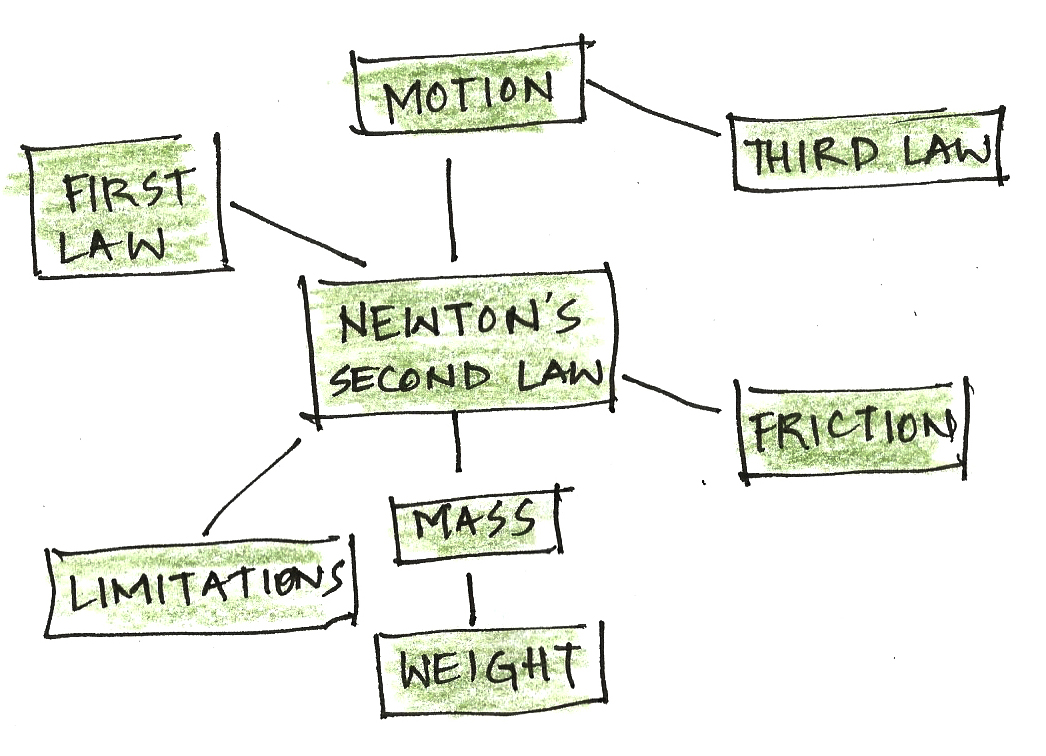
One of the best ways to begin practicing holistic learning is to start drawing a diagram that associates the information you have learned. Better than taking notes during a lecture is drawing a picture for how what you are learning relates to anything else you have already learned. Once you get good at this you will be able to visualize the diagram before it is drawn, but start drawing to get practice.
When I try to understand economics it often helps me to visualize the relationship between different factors. I view cycles of money, GDP or price levels as a structure that combines all the different elements. If you can’t immediately create vivid pictures of the information, try drawing them first.
3) Use Metaphors
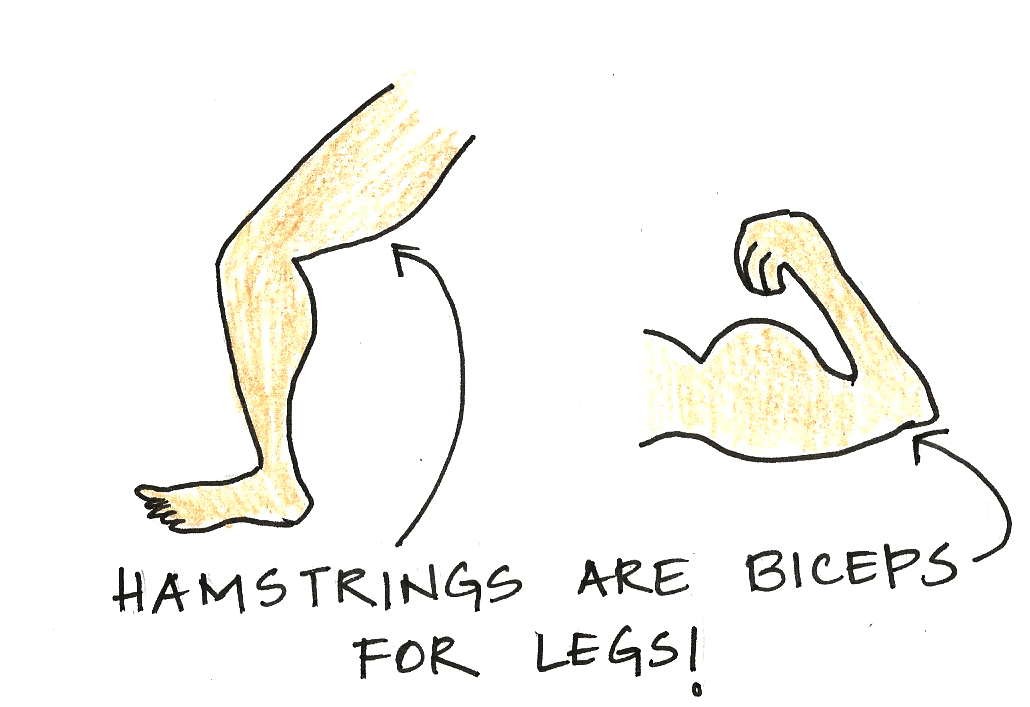
Anything you are learning should be immediately translated into a metaphor you already understand. When reading Niccolo Machiavelli’s The Prince, I understood his writings by relating all the examples of statecraft and war he offered to areas of business and social relationships which I already understood.
While visualization creates tight webs that interlink within a subject, metaphors create broad webs that link completely different ideas. You might not realize how that blog article on fitness you read two weeks ago relates to math, but through making metaphors you have a huge reserve of information available to you when you need it.
4) Feel It
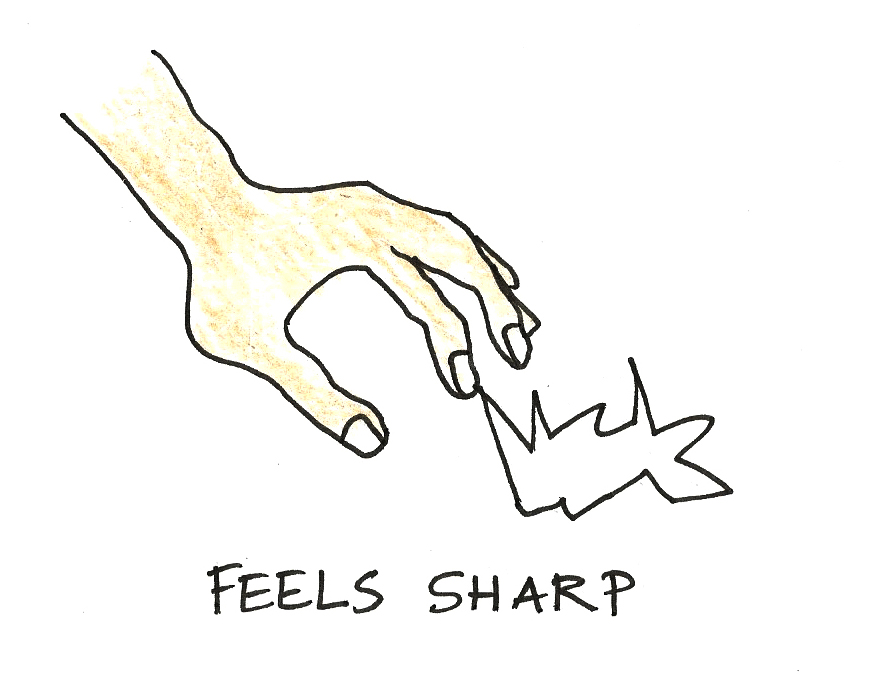
Another technique I’ve experimented with to improve my holistic learning is feeling through ideas. This one is a little more difficult to explain, but the basic idea is that instead of associating an idea to a picture or another metaphor, you associate it with a feeling. I’m a visual learner, so I’ve found it to be ineffective for large pieces of data, but it is really helpful for data that is otherwise hard to relate.
I used this process to easily remember the process of getting the determinant of a matrix. For you math buffs, you probably already know that the determinant of a 2×2 matrix is basically the left diagonal minus the right diagonal. I was able to associate this information into my web through a feeling by imagining what it would be like to move my hands through each diagonal on the matrix. This is an incredibly simplified example, but feeling ideas can be very useful.
5) When in Doubt, Link or Peg It
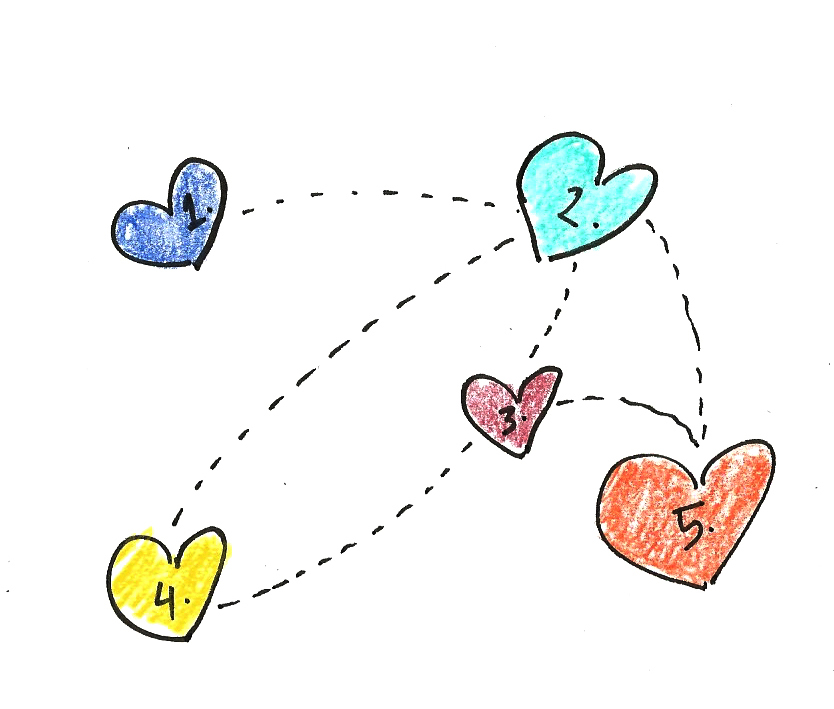
Questions, visualization, metaphors and feeling should cover about 99% of the information you need to learn. They are the most effective ways to interlink ideas. But if you still need to memorize some information that you can’t understand or relate, your fall-back can be the link and peg system.
Explaining these memory systems is out of the scope of this article, but the basic idea of the link system is to create a wacky, vivid picture relating two seemingly unrelated ideas so that a connection between them is forced. The peg system takes it a step further creating a simple phonetic system for storing numbers and dates. You can learn more about these systems here.
Dirt Roads and Superhighways
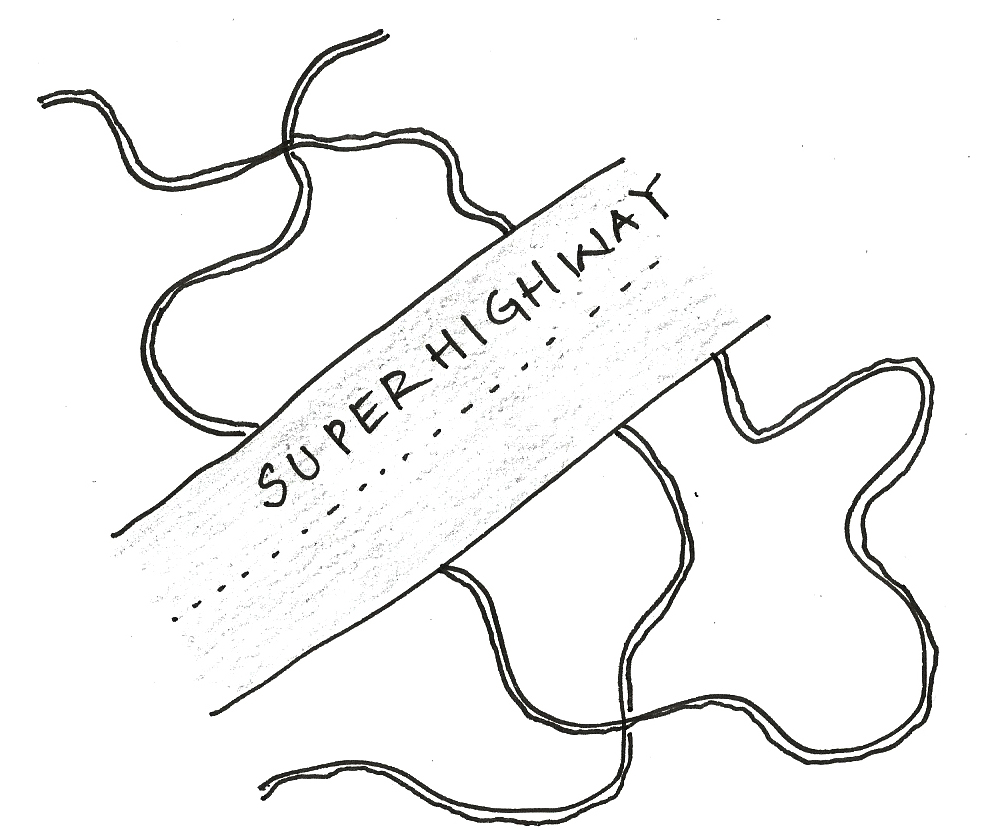
An effective web should heavily interlink between ideas of a similar subject, but it should also have links that extend between completely different ideas. I like to think of these two approaches like comparing dirt roads and superhighways. You need lots of cheap dirt roads to interconnect closely related areas and a few superhighways to connect distant cities.
When I was learning history I would make dirt roads connecting the aspects of one particular time period and culture to itself. Linking the artistic achievements of the Song Dynasty with their political situation. But I would also make highways and superhighways. I would compare Song China to India and to the politics in the United States.
Some people build a lot of dirt roads but forget the highways. They understand things well within a subject, but they can’t relate that subject outside of the classroom. Hamlet is one of my favorite literary works because in the classroom where I learned it, our teacher went to great lengths to help build superhighways. We would discuss how aspects of Hamlet related to our own life, politics and completely different areas. As a result I remember more from that play than almost any other piece of literature I studied.
The End of Studying
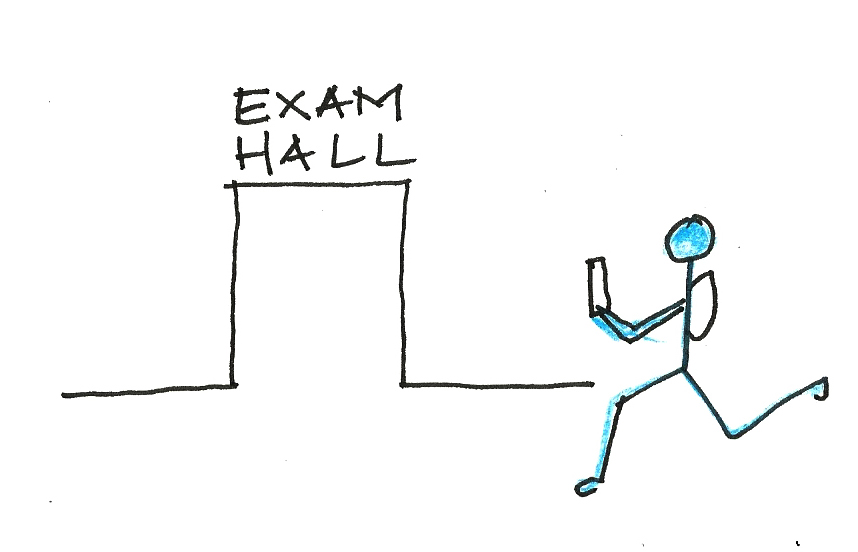
Studying should be like stretching before a big race. It isn’t a time to get in shape. I lied a bit when I wrote the title of this article. I do study. But I don’t do it for the same reasons that other people do. I study to ensure my web is functioning, not to start building it. Even when I do study, it is just a quick review, never an all-night cramming session.
Some of you may read this article and start thinking that going to the trouble of drawing out diagrams and thinking hard about metaphors to practice holistic learning is going to take too much time. I believe the opposite is true. I have saved a lot of time using these techniques so that school has become just a minor time investment in the overall work I do each day. Practice holistic learning and you can spend less time cramming and more time actually learning.
Looks like I can’t help but start a bit of controversy.
![]()
I’ve addressed many of the confusions and concerns this article has generated with a follow up post on what holistic learning is, precisely, and how you should really be using studying to learn. Ultimately holistic learning isn’t about passing exams but understanding anything, a skill anyone can use.
Check it out here: Studying and Holistic Learning
Edit: April 26, 2006 – Wait! There’s more. Check out the Holistic Learning E-Book for 27 Full Pages. Full color illustrations and best of all, it’s completely free.
Check it out here: Holistic Learning E-Book
Edit: September 10, 2008 – Still want more? I’ve written a full e-book guide covering holistic learning, answering common questions, dozens of techniques, productive studying skills and exercise templates to get you started onto holistic learning. Plus, if you don’t love the book, it comes with a 120-day money back guarantee.
Check it out here: Learn More, Study Less


I'm a speed-reading, vegetarian, holistic learning, productivity hacking recent university graduate. And, for the last five years I've been experimenting to find out how to get more from life.
Hey Scott, I was wondering if you could post several specific examples of how to relate information to other subjects which seem to have nothing in common. For example how do you relate Anthropology definitions to computers. It would be a big help if you could go into the details on several examples of how you relate information. Thank you.
Tyson,
Generally when I interlink ideas, I don’t pick two ideas and then see how they fit. I start with something I vaguely understand and see what matches up.
Play the “What does this Remind Me Of?” game with yourself when you are trying to understand a subject. Ask yourself what is similar to what you are studying. As soon as an idea pops in your head spend a bit of time figuring out how they are similar.
If you want more information, check out my free book on Holistic Learning:
http://www.scotthyoung.com/blog/books/
[...] Scott Young is a University student who writes about personal development, productivity and goal setting. Some of Scott’s popular articles include: Habitual Mastery, Double Your Reading Rate and How to Ace Your Finals Without Studying. You can get his free e-book on Holistic Learning here digg_url = ‘http://www.lifehack.org/articles/lifehack/achieve-flow-by-hacking-your-tasks.html'; ( function() { var ds=typeof digg_skin==’string’?digg_skin:”; var h=80; var w=52; if(ds==’compact’) { h=18; w=120; } var u=typeof digg_url==’string’?digg_url:(typeof DIGG_URL==’string’?DIGG_URL:window.location.href); document.write(“”); } )() Author: Guest Author Posted: Thursday, May 3rd, 2007 at 8:30 am Tags: flow, hack, task, time Share This [...]
[...] About Scott Young: Scott Young is a productivity and improvement blogger. You can check out his blog here, and you can subscribe to his feed (updated 5-7x per week with posts similar to this one). Some of his most popular articles include Habitual Mastery, Double Your Reading Rate and How to Ace Your Finals Without Studying. Filed under: Success, Personal Development, People Skills, Leadership on May 05,07 | [...]
Scott,
Great article. Even though I’ve been out of school for a while I can remember how much i detested classes that pushed rote memorization on you without explaining the “why?”. This article really helped me make sense of my lower effort and higher results in school.
In my reading about the human brain, especially Jeff Hawkins theories, it became clear to me that our brains seem to be structured on the basic idea of interconnected information. Neurons grow and connect information and the greater number of connections or the THICKER the connection the easier it is to recall. Your holistic approach deals with creating great numbers of connections to a piece of information and repetition (through USE of information or ROTE memory) makes thicker connections. Obviously this is a simplified explanation but I believe it answers some of your critics. Rote (repetitive) memorization works in that it makes strong connections. However a method that begins with “holistic” or I prefer “interconnectedness” gives information many paths by which to be found. Then by using the information over and over we thicken the connections that we use the most.
A common criticism of your approach I noticed was that more complex subject can’t be studied holistically because it requires too much specific information to be learned before “the whole” can be understood. This criticism falls short because the human brain does not require a big picture view in order to interconnect the parts. In fact interconnectedness does not even require that piece of information be related in any specific way. As long as your specific brain can make a connection to anything it works. For instance…I’ve have the greatest success memorizing lists by linking them to nursery rhymes. I think the absurdity of linking the periodic table to Little Red Riding Hood makes the connection even stronger. Those who seem to memorize most easily still use interconnectedness in a repetitive way. It it inefficient to memorize information without connecting that information to something already known.
Keep up the good work Scott.
Art
[...] About Scott Young:Scott Young is a productivity and improvement blogger. You can check out his blog here, and you can subscribe to his feed (updated 5-7x per week with posts similar to this one). Some of his most popular articles include Habitual Mastery, Double Your Reading Rate and How to Ace Your Finals Without Studying. [...]
Great points Art!
[...] Many thanks to Jacquie for pointing this out to me. It has led to a great deal of insight into how kids who have trouble should study. The system I use for learning I’m going to call holistic learning. But in order to fully appreciate what holistic learning is, you need to take a look at it’s opposite – compartmentalized learning. … [...]
[...] I have had a minor case of cheating assumptions when it came to study for exams. Because aside for some quick review I didn’t do it. Even in University I’ve aced exams where the total review time before writing was less than a half hour. It may sound creative or smart, but until recently it always felt like cheating. [...]
[...] You can check out Scotts blog on productivity, learning and improvement here or subscribe to his feed (updated 5-7x per week) here. Some of his popular articles include: Habitual Mastery, Double Your Reading Rate and How to Ace Your Finals Without Studying. [...]
[...] Scott Young is a University student who writes about personal development, productivity and goal setting. Some of Scott’s popular articles include: Habitual Mastery, Double Your Reading Rate and How to Ace Your Finals Without Studying. You can get his free e-book on Holistic Learning here digg_url = ‘http://www.lifehack.org/articles/communication/how-to-handle-criticism.html'; ( function() { var ds=typeof digg_skin==’string’?digg_skin:”; var h=80; var w=52; if(ds==’compact’) { h=18; w=120; } var u=typeof digg_url==’string’?digg_url:(typeof DIGG_URL==’string’?DIGG_URL:window.location.href); document.write(“”); } )() Author: Scott H Young Posted: Tuesday, May 22nd, 2007 at 9:10 am Tags: comment, criticism, feeback, feeling Share This [...]
i guest, i’d been done the same like u do. instead of building it is better to link it up and make a rational reason between the node but i missed organizing the nodes.
[...] read more | digg story [...]
[...] Want more tips? The internet is full with tips on more efficient studying. From speed reading skills to mnemonics, to getting organized, all you have to do is a quick Google Search. My favorites? Scott Young’s post on holistic learning and Speed Reading, the book Breakthrough Rapid Reading, Kevin Trudeau’s Mega Memory. [...]
[...] I am truly elated due to the recurrent confirmation of the belief that I have been having since long ago. It has to do with me doing or rather implementing and utilizing algorithms and methodologies without realizing that they were just esoteric valuable advices given by experts to the common people in the form of articles or self-help sessions.The latest confirmation happened gratified me while reading this article; I have been and still am a genuine Holistic learner…it’s part of me. [...]
hi Scott!
I’m a University student, too, but from half a world away. (I’m a Development Studies major at the Ateneo de Manila University in the Philippines.)
a few points to offer:
1. you make a lot of sense. compartmentalized learning just isn’t cutting it anymore. we can’t possibly consent to knowing more about less and less. though specialization is a must for some professions, the better deal’s to be as comprehensively diverse as possible.
what am i saying here? i suppose holistic learning mustn’t be limited to the classroom setting. i agree with you—it’s a way of life, a path to aid us in sucking more of the marrow out of being. what’s the point of living if you don’t learn anything from it, or even scarier, aren’t moved/affected by what you learn?
i’m not vilifying compartmentalized learning. surely it has its merits. but i reckon there are some areas in life that are richer for being webbed in with other aspects, as opposed to being boxed or objectified. i don’t know about you, but the biochemistry of kissing becomes more interesting when it overflows into experience. (where did that come from???)
2. pompous ass is something i’ve been called myself. i can relate, as a writer and an achiever hahaha. i’ve deviate from the mean (funny statistical way of characterizing excellence) in lots of ways. one of them is my keeping a weekly column (VAGABOND) in the Sun Star Davao. i posted some of my articles on the bulletin boards of my dormitory lobby, and after a day some of them were gone. whether the ‘theft’ was done out of extreme admiration (kidding) or deep loathing (nearer maybe) i do not know, but i’m paraphrasing a quote for such pompus-ass moments: envy is the tax distinction must pay.
3. the health/fitness area of your articles resonate with me. if i don’t get to run or at least walk for one day, i feel woozy and suboptimal. it’s also super fun to feel like you’re dying and being born again after a lung-ripping run. cheers to endorphins! another paraphrased gem: people wo can’t find the time for exercise will soon be making time for sickness.
an aside:if you’ve got spare time to burn, tell me and i’ll email you the links to my past articles. see what life’s like this side of paradise : )
all the best!
aissa
please forgive the grammatical errors: should be “I’ve deviated”.
hello to everyone!
The more I learn, the more I discover how important making connections is. I have recently studied improvisational comedy quite intensely and the most important device to work laughs out of is in making connections with previous facts… Even bland connections such as repeating a name earlier mentioned somehow leads to humor. The human brain drools over connections from learning to comedy to fun to depth (creative depth, connecting stories, making homages, easter eggs, plot twists). Some of the most visceral and engaging feelings we get are from making connections. Huzzah!
Cheers,
Bill Bang
“I believe that myself and anyone else who can produce these results simply has a more effective strategy for learning new material. With my system of learning, you only have to hear or read something once to learn it.”
Oh, great, now you just have to package your “strategy” into a 70-page ebook with a random bullshit extra and sell it as an ebook for $49.99, no, wait, $39.99, no, wait, today for this special offer just $19.99!!! AND you get that extra ebook! AND you get a FREE email subscription to spam–erm, I mean, a newsletter.
THEN you can create another fishy-lookin one-page site selling an ebook related to how you made $1 million dollars in two months working three hours a DAY! (The trick, of course, is to create a worthless ebook promising to make a million dollars.)
it is a very interesting article to me
when i read, sometimes i laugh, sometime i think deeply… thanx
Great article.
I didn’t have 2 hours to read all comments; but, I picked up a few people saying this comes more naturally to people who love learning or to visual learners. I hope that I’m both as I’ve always tried to think, work, learn, study, plan etc. in this way.
[...] Take two ideas and ask yourself how they relate. They can be ideas within a specific field (short roads) or between two completely different fields (freeways). By doing this you create a roadmap for traveling between information in your brain. I suggest reading my article on holistic learning if you want to find out more. 4) Metaphor [...]
hey you teach a great strategy, I used to learn the night before the exam, instead of 2 days before. And it kept me wide awake all night long.
Hi Scott,
After reading your e-book and articles, I still find it confusing. How exactly can you visceralize math problems? And how on earth can you make models out of them?
To tell you the truth, I’m not a holistic learner, but I have plenty of time to start. I hope very much to learn more about this way of learning.
Thanks for sharing this.
Well thanks, sounds good, and makes sense – like a good national song. (im alredy interlinking, right?)
Čau!
[...] Earlier this year, Scott turned his keen how-to eye onto his own student life, and published a controversy-generating post titled: How to Ace Your Finals Without Studying. In this week’s Disruptive Thinkers interview, Scott explains the ideas behind this bold claim. [...]
Having tried this method of learning, I am sad to say for me personally it failed to work. I am now back to the struggle of learning by rote and forcing memory. I did however find this a interesting article, and just wish that i had the gift and ability to use this method.
Ohshi-!
I now know why I never study and still ace my tests. o:
Cool.
Found this through the magic of stumbleupon~
“Holistic” learning sounds a lot like old fashioned paying attention and studying until you “get” the material. When you’ve been doing that awhile you’ll fashion yourself a “web,” or an education to draw upon. After you’ve done all of this work, the studying for the exam has mostly taken place beforehand and all that’s necessary is a review.
Everyone has always known that cramming – call it compartmentalizing if you like – isn’t the same thing as real learning. I see nothing new here.
[...] How to Ace Your Finals Without Studying [...]
[...] Spring of 2008. The book should expand the holistic learning concept that I originally introduced here and produced a free e-book about. Among other things, here’s what the book should do that you [...]
riiiiight, because free is such a rip-off. (or i just didn’t catch on to your humor
)
Thanks for the article Scott, I find this to be very intriguing; i hope i can incorporate this into my learning methods.
[...] How to Ace Your Finals Without Studying Student blogger Scott Young introduces the concept of holistic learning — if you learn how concepts connect, you don’t need to re-learn them come test time. [...]
Scott, where’ve all the replies gone?
Great article, Scott! I’ve used many of these techniques in the past and still use it in learning new material for a talk for ARRiiVE (www.ARRiiVE.com) or AspireNow (www.AspireNow.com).
It’s the first time I’ve heard mention of holistic learning, so you put something out there that resonated with me.
I loved reading this article because it made a lot of sense. Unfortunately, I came through a system where it was compulsory to learn by rote just to pass an exam. The point of the exam was to produce 40 pages of answers in near perfect form. I can’t count the number of times I explained something correctly in my own words only to be docked marks because it was not ‘exact’. I’ve had to force myself to memorise things over the years just to pass rather than ‘learn’ things my own way. Oh well, maybe there’s still hope.
I agree with everything you say. I have done the same thing. You are more articulate.
It is good for you to follow your own approach doing things you enjoy.
But you are wasting your talent. In the long run your life will be much more valuable and you will be a better person if you look for something that is a challenge to you, an arduous and worthy goal that would be impossible for most and is difficult for you.
You are not the same as other students. If it gives you pleasure to compare your easy successes with their ordeals, it means that fundamentally you do not recognize your own worth.
“Argue with a fool become a fool.” There is an analogue to that here.
The holistic learning approach is a good way to cover up some vast matter before an exam or on presentation. This method is hard to follow and it demands a lot of discipline and enthusiasm for for what you are doing. But tell me one thing how can you prepare holistically for something like mathematical physics???
[...] How to Ace Your Finals Without Studying | Scott Young [...]
Satyajeet,
I wouldn’t say holistic learning works well as a cramming technique. I’ve used many of these techniques in both math courses and physics, so I believe it can be done. A proper explanation of how, would take too long for the comments here, so I suggest reading my other articles on the subject or waiting for my book in the Spring.
-Scott
Finally, someone has been able to express exactly how I learn and how I view others’ methods of learning. Thank you so much for this.
Thanks for the tips. Keep on the good works.
This method actually doesn’t work for cramming subjects like chem, physics, and calc, since those types of subjects require alot of practise and usually in cramming u have limited time to study so u’d just start practising. I think it’s best to use these tips throughtout the year for them to be effective, during lectures stuff like that. Scott you said you’ve used the teqnique with math and physics, did u use visualization and diagrams mainly or metaphors, did u try to feel the subject too? You probably still had to practise questions, but did it make it easier and faster to do? …wheter u use these tips or not, one thing is for sure, during studying u have to have alot of FOCUS. You have to really concentrate on ur work.
Kabir,
No, holistic learning doesn’t work well with cramming. I use a variety of techniques with math/physics classes. More visualization than metaphor, but I’m a highly visual learner, so that’s a personal bias and not a rule.
-Scott
My goodness, that’s one inaccurate title. That aside, I feel pity for those who’re going to eagerly waste time with foolish expectations on this “methodology.”
Consider the Ohm’s Law — I = V/R. By way of algebra, any student could (and should) be able to derive it in other forms. Do you preview this doing as something of your methodology? Such a thing should be integral in the ACTUAL studying (for both memorization and conceptual understanding). Of course, many formulas can be easily derived by other formula (e.g., the Power Law, from the previously stated Ohm’s Law), but a student has to start somewhere — he/she has to know that I is V/R, and the only way that can be learned (or memorized) is by writing it on a peace of paper a good hundred times. There’s no way around it — you don’t have the time on an exam deriving weird formulas, there are things that have to be known instantaneously. The same thing is true for virtually all other fields of study.
There are some people who learn more easily than others or perhaps have a knack for certain subjects, but that is absolutely no reason for undermining the need of rote-memorization! I’m learning Latin these days, and you know how I’m memorizing basic noun and verbs? Making about a thousand note cards and quizzing myself on them. Effective? You bet.
pHuker,
Completely avoiding memorization is often impossible. The idea behind holistic learning is that it should be done sparingly.
And do I derive every equation during a test? Of course not. What a fantastic waste of time. My point is that when you understand where a formula comes from, it becomes much easier to remember.
-Scott
[...] How to Ace Your Finals Without Studying is an interesting discussion of holistic learning. I do not think, however, that it is useful at two a.m. the night before your test. [...]
What about mind maps?, I was reading a book which claimed that the best way of note taking in class and during study was by using mind maps, linear patterns. How does that fit with holistic learning?
Its interesting that holistic learning creates a web that runs along the crown of the head and interelates the left and right brain. While the file method appears to activate the memory centers in the left and right temporal lobes without the linking or the crown. Your way of learning is far superior to the other way and as a physician who went through medical school using the file system, it’s amazing I passed.
By the way I discovered your site through my highschool daughter who has great difficulty memorizing like her father.
Thanks for the help.
[...] You can check out Scotts blog on productivity, learning and improvement here or subscribe to his feed (updated 5-7x per week) here. Some of his popular articles include: Habitual Mastery, Double Your Reading Rate and How to Ace Your Finals Without Studying. [...]