Scott H Young

Why Self-Educated Learners Often Come Up Short


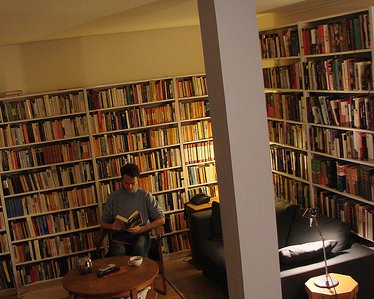
InTheLibrary

I have a pet peeve about certain people who attack formal education systems and claim to pursue self-education. Not because universities are spectacular learning environments (they usually aren’t). Or even because self-education isn’t a worthwhile goal (it’s probably one of the best).

It’s because I’ve noticed many of the university-hating self-taught are the kind of people who read a couple self-help books per year and believe that’s basically the same as getting a degree. Then they get angry at the bureaucratic system that won’t let them get their ideal career. Sigh.

Why Self-Education Often Does Worse than Schooling

In my experience, self-education tends to be very good at high-level ideas.

If you wanted to spend a few months understanding evolutionary biology, you could probably read about a dozen books on the topic. These books would give you the broad strokes of what’s going on in the field, the challenges being faced and what science currently understands.

But I’ve noticed that the typical approach to self-education tends to be lousy at the deep, detailed knowledge of a field. Reading those evolutionary biology books won’t give you the statistical methods for analyzing gene selection, or the functions for how a population evolves over time.

For the most part, this omission isn’t a bad thing. I have no desire to do research in evolutionary biology. So if I had only read The Selfish Gene, The Origin of the Species and a few other books on evolution, I’d be satisfied with my knowledge. The broad strokes are enough.

The problem is when one tries to replace self-education for more formal training. Such as trying to give yourself the equivalent to an undergraduate degree in computer science, nutrition or accounting.

Here, the benchmark for success isn’t whether you can keep up a conversation about the ideas at a cocktail party. You also need deeper knowledge of the technical details of the field.

Why is Deeper Self-Education Important?

I really enjoy Ben Casnocha’s “T” model for learning new things. The idea is that, ideally, there should be a wide range of subjects you have a basic understanding of (the broad top of the T). But, in addition, there should also be a select few skills you are an expert in (the narrow stem of the T).

For the top of the T, deeper self-education isn’t terribly important. I’ve read books on linguistics, evolutionary biology, cosmology, gestalt therapy and world history. But I’m not an expert on any of those things, nor do I plan to be.

However, for the bottom of the T, I believe it is critical to know how to develop a deeper approach to self-education. Let’s say, for example, you want the major focus of your learning efforts to be computer programming.

You could take a degree, or even post-graduate education, in the subject. But for a field as rapidly evolving as computer programming, what you learn in school will quickly be replaced. So, even if you pursue formal education fully, you’ll rely a lot of educating yourself.

Alternatively, you could be completely self-taught. If this is your approach, then the necessity to deeply educate yourself is even greater. Quick overviews of topics without understanding mathematics, operating systems or computer architecture won’t make you an expert.

In either case, whether you pursue university doggedly or abhor it, you’ll need to spend a lot of time teaching yourself if you want to become really good at something.

How to Become Deeply Self-Taught

I’m still experimenting with the best approach to this. My major focuses are writing and entrepreneurship, both of which tend to have far less technical knowledge. However, other areas I’d like to expand to a decent level of depth include statistics, web programming and psychology.

These other fields are adjacent to my really important work, so I believe having the equivalent of a year or two of formal education in statistics, programming or psychology would support my major focuses of writing and running businesses.

So, while I can’t offer the magic bullet that will allow you to obtain the same knowledge without the tuition costs, I can share what I’ve found so far.

The Importance of a Curriculum

The reason acquiring deeper knowledge is difficult, is that the further you stare down the microscope, the less relevant it appears to the big picture. This is often why so many students lose motivation at school. Just how is understanding integrals, polymorphism or the ATP-cycle important for my life?

The one strength of formal education is that it forces you to adhere to a curriculum. When you know that you need to learn Statistics 1000 before taking on Statistics 2000, it is easier to focus on learning about p-values and bell curves, even if they seem irrelevant at the time.

Therefore I believe any self-education attempt needs to find a curriculum early on. Think of it like having a map when you’re in an unfamiliar country. No, you don’t need to follow it dogmatically, getting lost can be part of the fun. But having a map with you ensures you don’t stay lost permanently.

Discipline Matters–It’s Why Most Self-Education Attempts Fail

Deeper self-education requires more discipline than university, not less. Formal education has grades, assignments, attendance requirements and all sorts of external incentives to keep you focused.

Those external incentives probably remove some of the intrinsic joy of learning and create new stress, but they also make learning harder to ignore.

A deeper self-education attempt requires some discipline to see it through. Unlike, broad-stroke learning which can be done from curiosity alone, understanding the gritty details often requires a more conscientious effort.

For example, at the moment I’m working on my French. I love learning French and enjoy it more than most of my formal education. However, that doesn’t mean I work on it only when I feel like it. Being my biggest goal during my stay in France, I’ve dedicated a few 30 Day Trials and many hours of deliberate practice.

Many of my peers stopped learning French once their French classes finished. Without some deliberate effort, it’s easy to forget about your self-education goals and give up.

Application Can’t Be an Afterthought

In formal schooling, actually applying the ideas is a far goal. When you first learn statistics, most professors don’t expect you to start doing your own sampling or analysis. The actual use of the knowledge is put in a backseat to passing tests.

But if you’re going to sustain the motivation to complete a deep self-education curriculum, application must be put first. Otherwise, it is too easy to lose sight of the big picture and stop learning.

Effort needs to be made not just to learn the ideas, but to start applying them immediately. When I was previously teaching myself computer programming, I would always have a project I wanted to use the new-found skills on.

I was able to stay focused on learning French while I was still in Canada, as I had a French girlfriend at the time. How’s that for motivation? :)

What If You Don’t Have the Time?

I have a theory that the most successful people in life aren’t the busiest people or the most relaxed people. They are the ones who have the greatest ability to commit to something nobody else forces them to do.

Many people find time for school. Even if they are taking night classes and have a full-time job, they still manage to show up. It can be stressful, but they do it.

However, far fewer people would stick to a deliberate self-education program. They haven’t paid tuition and nobody is going to fail them if they don’t show up. So often they don’t.

I can’t think of another explanation for why someone who is serious enough to take night classes to learn a foreign language or build a new technical skill, can’t apply the same effort to educate himself.

The Goal of Teaching Yourself Everything

I wrote awhile ago about my personal goal of learning everything. I believe self-education (and especially the deeper self-education I mentioned here) is critical to that goal. And, if we really are living in an information-based world, it’s probably critical to almost every goal you have.

What are your thoughts on deeper self-education? Have you been able to teach yourself a subject to the same standards (or higher) than a university degree? Please share in the comments!

Print Friendly
StumbleUpon It!

This website is supported, in part, by affiliate arrangements (usually Amazon). Affiliate relationships are always marked by bolded links.


42 Responses to “Why Self-Educated Learners Often Come Up Short”

  1. Clay says:

    I am a big proponent of learning guided, in person, by a mentor whenever possible.

    It took me a while to realize the importance of a guide or mentor, but it really smacked me in the face when I tried learning my first foreign language, and witnessed others trying the same thing. There are so many nuances in every field that will be completely overlooked by even the most advanced learners that self-directed learning is usually a recipe for disaster.

    To put it more bluntly, I have yet to meet a single self-taught person who speaks clean, clear Spanish. I’ve met hundreds attempting it and failing, though.

    We, as humans, are able to evolve so rapidly in culture, society, and ability because we have the unique ability to share and improve on previous knowledge. No other animal shares that with us. So why do so many people completely neglect our gift for learning from others and attempt everything from the ground-up?

  2. Personally, I think we learn better when we incorporate the wisdom of others. There are probably some exceptions but more minds equals more knowledge. That way you can take bits and pieces of knowledge you receive from others, which is probably more than you would acquire on your own, and make it work in the best way for you.

  3. tara says:

    True.I noticed many bloggers love to put self-education on pedestal but the truth is not anyone can do it in the right way.Most people just end up procrastinating.You can delude yourself you are getting something done when you actually practice wishful thinking.Dipping your toes in a subject and reading a lot diesn;t mean you are understanding the material as you always can’t identify what you don’t get-noone is examining you,there’s no strict criteria etc.
    That said I favour your idea of projects-I’ve done a lot of self education projects and they certainly were worth the effort.

  4. Justin says:

    I’m only ever trying to become an expert in my own thinking.

    For me, deeper self-education is recognizing the point in my learning in which I (can) become an expert, a thought leader, etc. of a particular topic. I consider myself an expert in one or two areas (at best), but I focus hard on keeping myself grounded in a student’s mindset for those things, even if/when I perceive mastery. Does that makes sense? If I were to lose the curiosity of a student, I would no longer consider myself an expert.

    In a world of redistributed content, retweets, etc., experts and expert sources are increasingly difficult to identify. People can now know many things about many topics, yet still know little well about anything at all. I think the idea of what an expert is is changing. So my question to continue this discussion is, How do we become experts? Is it when we believe we’re an expert, when our community believes we are, a combination of these, or something else entirely? Retweeting a source doesn’t make someone an expert, it makes them a news outlet. There’s a point where we become content/knowledge creators instead of consumer/retweeters… How do we get there? When we arrive at this place, when we’re creating new knowledge and content and innovations in thought, maybe then we’re experts.

    Deeper self-education opens the door to innovations in your own thinking of nearly everything. When you understand something so clearly & so deeply your entire perspective changes and you begin to redesign/reconstruct the world around you from scratch, if only to test everything you thought you believed in the first place. I guess it’s more about becoming an expert of yourself first. When you do that, the perspective it gives you on everything else around you can be applied to most things.

  5. fnurrboll says:

    Scott,

    I believe you’re wrong when you say that the things you learn in school about programming are soon going to be replaced. The CS degrees at better universities (take MIT as an example) give a good timeless education at a sufficiently abstract level. You will need to read up on new syntax when you change programming language but you can still see that it’s essentially a turing machine you’re programming, and therefore the concepts are still the same. It’s just like when you already know french and english – it’s much easier to learn some german.

  6. Casey says:

    One real advantage of the university education system is the availability of faculty. Sure, they’re not all great as teachers, or even as people, but it only takes a few excellent professors to make an indelible impression (think the oft-cited 80/20 principle here). This impression can take many forms, either as interests, goals, or more in line with this post, challenges. To use your own analogy of the “T”, people with a deeper/longer bottom can pose questions your have not even considered, or discuss concepts from angles you have yet to see. That said, to actually get to this point of discussion with a professor (or well-qualified TA), you’ll most likely have to go to office hours or set up discussion meetings, which basically takes on a form of self-learning (wouldn’t a self-learner ask the author questions if given the chance?) So, for those still in school, why not combine self-learning in university? They’re not mutually exclusive.

  7. I agree with Wendy, at the University, you have all the people who are so much wiser than you are. You have the opportunity to meet them, talk to them and learn from them.
    Besides that, you have the opportunity to do a lot outside school. There are all these clubs and projects, University is the best place to develop great social skills. Having fun with friends is not only about the fun, you learn a lot from them.

    I think self-education is only possible in fields that aren’t saturated that much. Fields that keep exploring and don’t need that broader top of the T to start you going down the small piece.

    I mean fields like internet marketing, blogging, internet show production. Internet is something you can’t learn from many others, I am probably the person in my whole year (among 400 others) who is busy the most with social media and everything, while I’m close to nothing in the internet world.

    Great post Scott, I like your writing!

  8. Mateusz says:

    Great article! Since you referred to French in this article, maybe my story will interest you a little.

    I’m a passionate English learner and I spend most of my leisure time broadening my knowledge and mastering relevant skills. I’m fascinated by the beauty of American accent and the language itself, which makes me eager to study and explore on my own. Now, I can’t imagine having to attend English classes, which are generally lousy and boring (in my experience, school lessons were stultifying). What I find the most exciting about self-studying is that it gives much room for exploration. No teachers telling you what to read or listen to. Over the last few years, I’ve developed my own effective system of mastering all areas of English. Every new idea or concept must be preceded by a careful exploration on the subject, which helps me come up with the most optimal solutions. What I’ve noticed is that this approach to learning is much more effective(and exciting!) than signing up for English courses. For example, Polish learners of English are almost never taught about pronunciation, which is generally neglected by tutors. I’ve heard many stories of people who, despite having a good command of English, were not fully understood by native speakers during their stay in the US. I can say the same about many other important aspects of English. The problem is that many learners have high expectations without being motivated to learn consistently on their own. Therefore, in this particular case, I think that taking language courses is not the best idea. I know what some of you may think-that for a determined learners this might be really useful, providing that they supply it with their own work. In my case, however, I think that such a step could be a stumbling block. I remember being really frustrated in my high shool when I used to sit in the class and do boring exercises. It didn’t help me improve my English at all. And had a bad impact on my motivation.

    Interestingly, I know a Polish self-learner who has been taken for a native speaker of English several times in his life (by Americans). His English is indeed impressive and he has achieved it all thanks to his perfectionism, dogged determination and passion.

  9. Satvik says:

    One big point is that when self-educating, it’s easy to ignore the parts that are hard or don’t fit your interest as directly.

    Take a Math problem set for example-when you’re self-educating yourself and doing practice exercises, it’s a lot easier to just do the exercises that come naturally to you or are easier, and ignore the hard ones that’ll actually teach you something.

  10. Duff says:

    Excellent article on the promises and perils of the autodidact. Having attended a Liberal Arts college, I wholeheartedly agree with this notion of the “T,” which is the same as picking a major yet learning broadly in the arts and sciences.

    Having maintained a love of learning, I have often sought to self-educate myself on a variety of subjects. I’ve seen that the self-educated are often more passionately involved and practically engaged with their subjects, yet often lack hard-nosed critical thinking and some of the painfully dull yet important areas of knowledge in their discipline. Some things are harder to study on your own simply because there is no one to talk to about what you’re studying. Yet there is definitely something to be said for pursuing knowledge independently, following one’s curiosity (with just enough discipline) to strange and unusual places.

  11. Michael says:

    I think the main aspect that makes the difference between most self-taught and uni-taught is the dedication to consistent learning.

    Reading a dozen books on biology is very different than reading one book, then discussing the ideas, running your own experiments, and then having a peer reviewed text/essay at the end of the course.

    There is no reason a self-educated person can’t have that extra detail and experience – it’s just that many don’t bother. As you write, it takes discipline to delve deeper that reading a few books.

  12. Caleb says:

    When I was in high school I took quite a few video/multimedia classes from the same teacher. The way his classes were structured he had one intro class that he taught, while at the same time loosely supervising the advanced class that was student led. Eventually that class became an independent study period for me, and the teacher encouraged me to learn on my own by tackling projects that required skills I did not yet have. I ended up learning several programs including final cut pro, motion, photoshop, flash, illustrator, and dvd studio pro to create film and animation projects. The teacher has a master’s degree in film and he worked in the film industry for 4 years, and I ended up teaching him applicable skills that he didn’t have.

    Of course I spent countless hours learning and applying those skills, including several overnight stays at the school. But I had free reign of my time and I used it to self-educate. It can work, you just have to be dedicated.

  13. Great post Scott! I agree that universities absolutely have their merit. I can’t possibly imagine attempting any aspect of my Engineering degree by myself, especially because of the incentives and discipline thrust upon me that you mentioned, which I honestly don’t think I could reach myself for the scope of tasks involved.
    I like the T analogy you alluded to, and it’s something I try to do myself in gaining at least a basic scope of other fields, while generally knowing what my focus is.
    A good balance is possible and mixing up both self-discipline and external academic pushes can be great. Even after university you can find them in other (academically and professional very respected) ways and it’s something that may appear in my next language mission ;)
    The formal education and self education debate will always go on. I passionately argue both sides, especially since I have spent a large number of years trying both out and see the benefits and downfalls of each of them.
    Someone who skipped the whole 3rd level education process does not appreciate the intricacy, depth, commitment, and especially appreciation of those wiser than them as suggested in comments above me.
    However, those only familiar with the academic approach may lose sight of the actual application of what they work so hard to learn about. Self-educated and self-disciplined people trying it on their own tend to be more practical and real-world about it, not being shielded by the academic bubble that tends to focus way too much on theory (which in itself can of course not be overlooked).
    A healthy balance of the two is ideal in my opinion :)
    Then again those of us stuck on one side for a particular application of this tend to be opinionated :P ;)

  14. [...] discusses the “T” model of learning (where the stem on the T represents learning something [...]

  15. Dave says:

    Now having recently dealt with difficulties that results from that massive bureaucracy known in larger universities, that is still not my main qualm with educational institutions Larger institutions, esp. in America, would love to paint themselves as bastions of higher learning but they are simply businesses. Businesses have interests that might compromise what they teach their customers/students. In almost any class I read, I try to find a book that offers opposing view points. Intro to macroeconomics? The Communist Manifesto. Nutrition 252? Michael Pollan’s In Defense of Food.

    Call me a skeptic (I do) but I personally believe self education best serves as a defense to indoctrination.

  16. Benjamin says:

    I like the “T” model you explained up there. I’m currently studying abroad in Japan (even though its only a minor for me.) with a major in Computer Science. While I’m taking a fairly intensive language course, I’m also studying math on my own to keep up my knowledge on the subject when I get back. Usually when I go the self-education route I end up abandoning the subject, but in this case, because it involves my major and I know I’ll be using it heavily in the future, I can be motivated to work on it everyday.

  17. Rebecca says:

    The people I know who are most successful at self-education tend to be the ones who have had some type of formal education to start with. That usually means at least a bachelors degree. That kind of perspective increases the likelihood of the learner getting to the depth a formal education would offer.

    Having said that, self-education misses out on a key element; the opportunity to discuss and debate with others who are studying the same thing at the same time. (The internet is full of “debate” but too often the people involved don’t know a whole lot about what they are debating.) I teach at a community college and it is often the comments of other students that cause the light bulbs to go on, not things that I say.

    To those who want to do it anyway, I would strongly suggest searching for course syllabi on .edu sites. You can find the syllabus for almost any possible university course out there somewhere. They can point you to the best textbooks on the topic, excellent reading lists, and (most important) current research, journal articles and other types of supplemental materials that will enrich your knowledge of the topic. Someone who teaches the course every semester at a traditional college can certainly point you in the direction of the right materials to develop some real depth.

  18. Scott Young says:

    Benny,

    Completely agree. There are upsides and downsides for sure. Also, I agree that a degree can help give the basics which facilitates further learning.

    fnurrboll,

    Yes, you’re right. I suppose it’s true of any field, the details change the basics remain the same. However, with technology rapidly evolving, there are becoming more and more details to learn…

    Stefan,

    I’d disagree that self-education is *impossible* in particular fields. Particularly with the outpouring of new OpenCourseWare from major universities, allowing you to take many (if not all) courses for free via the internet in the near future.

    However, I do concur that some subjects are particularly difficult. Not to mention that accreditation may prevent you from practicing your field without the appropriate degree. (Medical students especially)

    -Scott

  19. tom says:

    I think education is learnt depending on the environment, I am from Wolverhampton and decided that I might learn better through my local university. I had already self taught myself a lot, but I am in my final year now and I have found that the University do not take time to encourage learning from someone else’s knowledge. The class I am in turn to myself to help them with issues in the areas I self learnt.

    I think generally we learn better through group opinions being expressed and wisdom from people that have been there and done it. At the same time depends on the person as many people that have made names for themselves have never had proper formal education, I mean above school level.

    I believe certain subjects can be self taught with no problems, but other areas do need experience a depth as explained above. Then again I would have thought a person would realise this and gain the extra knowledge or experience for themselves.

    That’s my view, I self taught myself web development from the basics up and to be honest with that subject I have learnt more self taught than going to university. But that could be the university not to good…

  20. Girish says:

    I SHOULD DO IT…self education is not suitable
    I MUST DO IT…self education is more than enough

    Interests + an inner drive…is the name of the game

    PS: I kinda share the same interests as u (entrepreneurship, writing, psychology & Research) ;-)

    Good day man

  21. You are right that it depends on what you want to study. High level stuff like your biology example can easily be done in selfstudy form, whereas topics that require communication or exchange of experience are better learnt in a curriculum.
    Take language studies for example: Language is about communication and when you start learning it alone (e.g. with a computer) you get a lot of feedback if you did your spelling right or not, but you don’t get enough feedback regardinig pronounciation (Although many products include speech recognition software, in my opinion it is not as good as a human counterpart).
    A human teacher (and also the class) can give more detailed feedback than any machine or textbook can.

    You can do repetitive task like learning your vocabulary with a book or a PC, but when you have memorized them (see also Scotts post about Linking (http://www.scotthyoung.com/blog/2007/03/25/how-to-ace-your-finals-without-studying/ ) you should seek the contact with other people also learning/speaking this language to practice and finetune your pronounciation.

    Sorry I expalined it with a language learning example and nt a general one, but this is my area of expertise and I hope you can relate this to other areas.

  22. Sid Ban says:

    Your article was a bit fragmented by jumping from one way of thinking about it to another. For people who are rote memorizers I suppose the authority of a teacher, university, etc. is appropriate.

    A point in question: How creatively involved is someone who scores high in class but has not learned from the teacher how to unify and extend what he has learnt?

    Another point: What does a person do when he/she puts down a large sum of money only to find that their teacher is lacking in the ability to teach them or a personality conflict comes up that prevents one from learning from this person?

    Another point: Do you think that Jeddhu Krishnamurti, Albert Einstein or other creative thinkers of their kind would profit from the stultifying effect of education as it is now taught at most universities? They have written how depressing it was to experience the “usual” teaching methods. Are they not making some point that we are ignoring? BTW, Krishnamurti has a school in Ojai. California. It would be worthwhile to interested persons to check out whether another education system might be more pleasureable and creative.

    To cut to the chase, we need to individualize how we learn instead of setting up standards about what is best for everyone. We don’t need stereotypical instruction and that everyone should be in the same boat. The dropout rate in highschools give a clear understanding of why one educational system does not work for everyone.

    .

  23. Miguel says:

    I completely agree. Any ideas about creating your own curriculum? I tend to look at the ones available online but sometimes the name of each course doesn’t really explain much about its content.

  24. Hi Scott,
    super cool thoughts indeed!

    I liked the most this part:
    “the most successful people in life are the ones who have the greatest ability to commit to something nobody else forces them to do.”

    I guess this is key to growth, once the “epiphany” of lifelong learning will hit someone, you are in….and don’t want to get out from this lifelong learning process.

    No one has ever told you to do that, nor your teacher at school nor your boss, but you simply read, studied, experimented just by your own will, as the feeling of :
    “damn, how come I was so ignorant, unaware, uniformed and yet it took little bit of effort to enrich myself and those around with new piece of skill, information, tip, trick, whatever…” it is so uplifting, that you simply keep on learning and the best part of it is: sharing it with world, and it is simply addictive;=)

    cheers from Slovakia, Scott
    ;-)
    i.

  25. Pete says:

    self-education is frequently too leisurely. Attending a university requires you to move along at a faster clip to keep up with assignments and prepare for exams. If you prefer deep introspection, then after a year by yourself you may still be on chapter three!
    Part of effective learning is instant feedback. At university you can always go ask a prof. Left to yourself, you may never overcome a sticking point, or even be aware when your understanding goes astray.
    Effective learners do both modes at the same time. After the assigned homework is done, they search out other problems in unassigned textbooks, read more widely, etc. Most of the better scientists all have advanced degrees, yet will tell you they are self-taught

  26. Travis says:

    Hey Scott,

    I’ve delved into self-education in the areas of nutrition, spirituality, and of course personal development. And to add to your points….

    One of the best features of self-education is that you create the curriculum. This allows you to dive head on into the areas in which you have the most interest. Of course, there is the danger that you will skip over the fundamentals. But if you at least follow your own curriculum and consistently seek to flesh out your weak spots, I believe that self-education can be much better tailored to your own learning process. After all, you decide what you want to get out of it- not the professor. And this often allows you to specialize in areas of your choosing in a manner that would never be possible in the classroom environment. It also encourages active vs. passive learning.

    Personal development is a great example of this. Ever seen a “personal development” class offered at university? I sure haven’t. That said, there are thousands of classes that intersect with various dimensions of personal development.

    In sum: we should use self-education to go above and beyond where formal education can take us, while simultaneously using it to build general, peripheral knowledge (as in your case with psychology, etc.).

    Fantastic article! Keep writing about autodidactism!

  27. Scott Young says:

    Sid Ban,

    Suggestion noted. My point wasn’t to argue particularly that self-education was better or worse than formal schooling, rather to illustrate why it often fails and my attempts to rectify that. Although I agree, the fragmentation may appear to come from starting the post as if I was taking sides.

    -Scott

  28. fmvs says:

    Imo self-edu can be far more effective than the formal one BUT you need some special skills (self-motivation, beating procrastination, planning etc.) to do it right. Without them it’s a struggle.
    One thing is sure: if you want to reach a high level of knowledge at a given field, you have to do it professionally (like formal education does): detailed planning, using the best available knowledge sources etc.

  29. William Kerr says:

    Through many years of both formal education, self-learning, and, for lack of better terminology, on the job training, I have found that a mixed approach for me has been best.

    As someone explained to me when I was in my early 20s, “half assed is no good no matter what cheek you have.” A bit crude but gets to the point quickly.

    My only issue with formal education is the linearity of it and the silo approach to cohesive study. Although this can be a benefit on some levels, our brain works in a radiant manner and naturally connects diverse topics which ‘education’ sometimes inhibits.

    I’ve found it takes great discipline to foster a totally convergent approach and if one is clear of their direction. The intersection of disciplines that a combined formal education, informal self-study, and on-job-training methodology gives better prepares people of any age for this fast moving 21 Century.

    One last thing that just came to mind. I have seen the many of the issues surrounding formal education at the moment is based on how it is presently presented, communicated, and run. Like everything else in life, there is a need for change, evolution, whatever one wants to call it and the overall higher education system is just as stuck, just as fearful, and just as intransigent as any other business facing a fast paced, interconnected world.

    One quick fact. Of all the billionaires in the world, 72% of them only have a high-school diploma and some not even that.

    I enjoy your posts

    William

  30. Ian K says:

    I have been thinking of this lately.

    “Not everyone try to self-educate themselves to learn.”

    That is a conclusion I arrived to when thinking of why some people succeed self-educating themselves and others do not. I think that many do it and fail because they feel they “should try”. Would it not feel good to know X? Then there is the lack of commitment to one’s desires. “Well at least you tried.”

    This is more deep than the showdown Self-education vs University.
    “Lack of commitment to one’s desires”.
    Seriously, we were -for the majority- never taught to stick to our crazy ideas when young. I remember days passed in search of an ephemeral pleasure because my parents did not want me to build a desk. They would do it for me, they would buy it for me and they would not let me build it.

    So then I am taught to be in a passive position. “Go to the store and you will receive a desk.” We are taught to expect others to give us what we payed for and or longed for. “Go to university if you want to be an engineer, you cannot do stuff without a degree.”

    Heck why would you want a degree? If you want to program computers do it. If what you want is something else, what do you want?

    “I can’t get a job without a degree proving my qualifications.”
    … (I leave you to arrive to the conclusion it leads to.)

    I have this question tickling me. Take all the people out of university and replace the teachers, etc by machines. Is it still worth it?

    If not, then how do we obtain all the good stuff of university without the coercion? Is it by acting toward our commitments, seeking relevant people?

    If yes, then it seems sad. Are we passive to the point that we take the easier and to my belief less fulfilling way?

    Well I just read myself and see that I am biased. Even though, I will not change it and simply say: University is the Rome of knowledge. All the roads led to it and now it is as anything else. Viva Internet.

  31. Ruth says:

    Interest is the key. I am a learning consultant, and I work primarily with self-educated learners. If there is no interest, no passion, then learning is minimal, no matter how many books are read or lectures are heard. The innate desire is the key.

    For the individuals with whom I work, nearly every one has found college/university classes to be frustrating and often boring. Adherence to curricula and pre-requisites is often unyielding, and after spending weeks and months covering things that they already knew, most give up and return to self-education. They seek out experts in the field who are excited to share their understanding and wisdom. They look for internships, or volunteer in places that can provide real-life experience to enhance their learning.

    Most tell me that their college classes often used textbooks that were outdated or incorrect. There was no effort to engage the students in active participation in the class.

    A passion to learn is the key to success!

  32. Eder Santana says:

    I believe that there is no other education than self-education, but this is too philosophical, I know…
    But, over “methods for self-education”, we can suggest to make a blog about the subject you’re trying to learn.
    People use to share what they already know, but it can be useful to write about what you are still learning. This can show to the others how much efforts can be necessary to lean something new.
    For example, we started to draw a year ago and lunched a blog few months later, there is nothing better for deep self-education than trying to teach others. Also, as Da Vinci pointed, by exposing yourself, you will be always trying to do your best.

    PS: Scott, why don’t you try to teach us French in a future post to verify if the suggestion is good? ;D

  33. [...] Why Self-Educated Learners Often Come Up Short via Scott H Young by Scott Young on 2/24/10 [...]

  34. Ben Casnocha says:

    Good post. The question is how much formal schooling you need to do. Self-educating from age 7 onwards is obviously a disaster. But there are diminishing returns at some point.

  35. Ian K says:

    How much formal schooling.

    What is formal schooling?

    For the Gaul of America, Quebec, in formal schooling all courses are determined for you. Until CÉGEP. That is formal schooling to me. A clear path that leads you to a choice you are unprepared for. Unleast you are a “loner”, rejecting for X reason the mainstream.

    We also know that teachers have mandatory directions for students. If you see the definition and axiom given as true then learners have no
    option in the current system.

    And the question is how much time of this kind of education we need? In the spirit of liberty, I say the question is do we need formal education? (What are those 20% of school that makes it worth it?)

    Those good students, why are they so few? Everyone does go to the same school. Then perhaps school is not what makes them good.

    What does formal education do? give to is students?

    To my knowlegde, school gives a place you must be. It gives structure and diligence to the part of your time that you renounce to control. It also makes you meet accountable people with passion. Of course there are other students with which you can escape boredom or if you are lucky have a purposeful adventure.

    If that’s it, then what? Peter Gray, research professor of psychology and writer of the textbook Psychology, has a great idea on his blog.

    It sums up to: Have the accountable and passionate people on diverse subjects in one place and make that place easy of access to everyone.
    ( http://www.psychologytoday.com/blog/freedom-learn? – did not find the specific article)

    Then there is Sudbury Valley school. That is not formal schooling nor self-education. It is unconventional schooling. Recently I left formal schooling to join an informal school and I can say that it feels great to have time to seek the answer every single time I ponder: Why?

    Henceforth, no. Formal schooling needed time: 0.

    If it tickles you, you should answer.

  36. Donna says:

    When I graduated high school, I was not one of the fortunate ones whose parents had provided for any further education. I had to do this myself. I was determined and ambitious to get a college degree, even after feeling “stuck” overseas as a military dependent. I lot of hard work entailed over 3 years, working part-time and taking night courses, finally achieving an AA in computer studies. The pell grant at the time helped a lot. That was a great experience, learning in a somewhat formal setting from professors who really knew the subject matter well. And, btw, yes those computer languages are old now (although some old systems ar still kicking them around) but learning those languages helped out immensely for future understanding about the basic mechanics of any code we right out in a logical sense.

    I came back to the United States, fully wanting to continue my education and obtain a Bachelor’s Degree. I immediately enrolled in what is considered a very reputable university in the area. Between the cost (no help from anyone or gov now), getting foreign “professors” who were trying to teach an english-based computer programming language yet could not SPEAK english well, lack of professor availability to explain further calculus questions, etc. needless to say, this all left a bad taste in my mouth of what it really means to go to “Big University”. I paid too much money to risk that experience again.

    Needless to say, I landed myself in a data clerk position ironically at an ivy league college, where my bosses believed in my talents and skills, AND SO DID I. They encouraged me to take professional courses (outside the university) targeting subjects I was truly interested in (SQL, Java, HTML, CSS, etc.) but would obviously help me obtain my professional goals. These courses furthered my skills to the point where I became a Senior Programmer/Analyst in 6 years (had to move up the ranks, which is not a bad thing). Not having a bachelor’s degree is not critical as long as your willing to take the time to take these courses and learn the necessary material. I did learn a lot on my spare time. A side note….I resent the fact that there are so many people out there claiming to be web designers and programmers when they haven’t even heard of w3c standards or think Dreamweaver is the end-all to website design (scary!). Take a course! Learn it the right way! It’s not difficult material, but how it’s implemented is very important.

    Knowing how the US is so tightly integrated with “making money”, I wonder if our college institutions are just big business these days. I feel our young people are brainwashed into thinking that they won’t be successful without a college degree. I am proof that this is not the case. Some formal education from the experts is obviously beneficial, but one doesn’t need a full-blown college degree in some cases to achieve success.

  37. Craig Thomas says:

    Nice interesting post. I’m mostly self-educated on subjects I care about and I can see where your coming from. I’m studying in university currently and I can see a deeper type of knowledge emerging.

  38. I only recently completed school and it has suddenly sunken in that I have absolutely no idea of the career path i’m going to choose. I have always been a “straight A” student, but now that i’ve experienced a few months in the reality, I feel that I have been focusing too much on unrealistic goals. I may need to seek out some kind of career planning or something of that nature to guide me in the right direction. Is there anyone that has been in the same boat?

  39. Shea says:

    Ultimately, all learning is “self-directed”. Professors and teachers and mentors – study groups and learning partners – books, school curriculum and the web are really all just resources we can either use well or use poorly.
    I agree that a classroom setting will tend to benefit learners who need the added expectations and discipline, but it is just as easy for others to zone-out in a classroom and walk away without any real learning.
    I don’t see how the learning skills needed to “self-educate” are any different than any other approaches to education. The self-educator needs to realize that sitting alone in a room ripping through books, while good and essential, is never enough. There must be an application of the knowledge – a problem to solve with it, a project to complete, another person to teach and mentor and even one to be taught and mentored. Question, gather, reflect, deploy and engage.
    Knowledge needs full circulation through our systems to become education – otherwise it is just a pool of stagnant gunk in a the corner of our brains.

  40. Jay says:

    It seems many are threatened by the idea that there are those in this world that does need the “formal direction” to guide their education. Take Ben Franklin for instance who had a formal education from age 8 to 10. While I was majoring in philosophy many students in my class were asked why are they in college most said “to get a degree” only one replied “to get an education”. When those exact same students were asked about their “education” they quite shockingly replied “I just want that piece of paper” (look out world). I believe that self taught individuals realy have a love of learning and its sad that society refuses to reconize this type education and those who are motivated enough to go after it…but then again we have an education sysyem that adhears to a set of standarized testing which in my opinion “waters down” the quality of education that we recieve.

  41. Jay says:

    my apologies on my first post I ment to say does NOT need (first sentence)
    Thanks

    Jay

  42. [...] Why Self-Educated Learners Often Come Up Short [...]

Debate is fine, flaming is not. Pretend that this comment form is a discussion taking place in my house. That means I enjoy constructive criticism and polite suggestions. Personal attacks, insults and all-purpose nastiness will be removed especially if it is directed at other readers.

Leave a Reply